The gray metal box in your basement, garage, or utility closet is the single most important safety device in your home's electrical system, and most people open it only when the lights go out. That is a shame, because the electrical panel is not complicated at heart. It is a distribution point and a set of guardians: it splits incoming power into manageable branches and stands watch over each one, ready to cut the power the instant something goes wrong. Understanding what it does, and what its clicks and trips are telling you, makes you safer without requiring you to touch a single wire. And to be clear from the start, this is an explainer, not a repair guide; work inside a panel belongs to licensed electricians.
What the Panel Actually Does
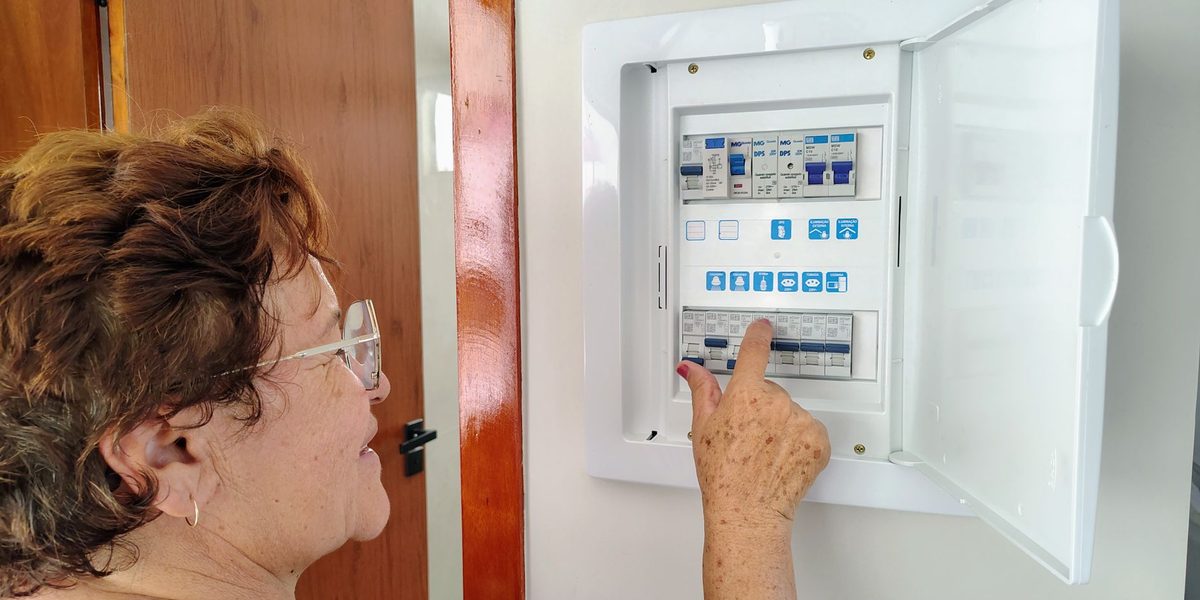
Electricity arrives at your home through service wires, passes through the utility meter, and lands at the panel, sometimes called the breaker box or load center. The panel's first job is division. A house cannot run on one giant circuit, so the panel splits incoming power into many branch circuits, each serving a zone or purpose: a string of bedroom outlets, the kitchen counter receptacles, the lights upstairs, one dedicated line for the dryer. The main breaker at the top can disconnect the entire house at once, which is worth locating before you ever need it.
The panel's second job is protection, and it is the more important one. Every wire has a limit to how much current it can carry before it overheats, and overheated wiring inside walls is how electrical fires start. Each breaker in the panel is matched to the capacity of the wire it protects, and its whole purpose is to disconnect the circuit before the wire can reach a dangerous temperature. A breaker does not protect your devices, and it does not primarily protect you; it protects the wiring hidden in your walls.
Breakers vs Fuses
Older homes may have a fuse box rather than a breaker panel, and the two solve the identical problem in different ways. A fuse contains a thin metal strip that melts when too much current flows through it, physically breaking the connection. It works exactly once and must be replaced. A breaker achieves the same interruption with a mechanical switch that senses excess current, through a heat-sensitive strip for gradual overloads and a magnetic element for sudden surges, and simply flips off. It can be reset and reused indefinitely. Fuses are not inherently unsafe, but fuse systems invite a dangerous workaround: replacing a blown fuse with a larger one to stop the nuisance, which removes the protection from a wire never meant to carry that much current. Breakers cannot be upsized casually, which is one quiet reason they became the standard.
Why Breakers Trip
A tripped breaker is not a malfunction. It is the system working, and the reason behind the trip falls into a few categories. An overload means the circuit was asked to deliver more current than its rating, the classic case being a space heater, a hair dryer, and a vacuum sharing one circuit. The breaker warms, waits, and then trips; unplug something and the circuit is fine. A short circuit is different: a hot wire touching a neutral or ground creates a nearly unrestricted path, current spikes instantly, and the breaker snaps off at once. Shorts point to damaged cords, failed devices, or wiring problems, and a breaker that re-trips immediately after reset is telling you the fault is still there.
The pattern of tripping is diagnostic in itself. A trip under a known heavy load, on a cold morning with heaters running, is usually an ordinary overload. A trip that happens the moment one specific appliance is plugged in points at that appliance. Trips with no obvious cause, trips that grow more frequent, or a breaker that feels hot or shows scorch marks belong to an electrician. And a breaker should never be treated as an inconvenience to be defeated: repeatedly resetting a breaker into a fault is asking a safety device to absorb a problem that needs fixing.
GFCI and AFCI in Plain Language
Two newer protectors go beyond what a standard breaker can see. A GFCI, or ground fault circuit interrupter, protects people rather than wires. It continuously compares the current flowing out on the hot wire with the current returning on the neutral. Those numbers should be identical; if even a tiny amount goes missing, the electricity has found another path, possibly through a person, and the GFCI cuts power in a fraction of a second. This is why GFCIs guard locations where water and electricity can meet: bathrooms, kitchens, garages, outdoors. They live either in special outlets with test and reset buttons or as breakers in the panel.
An AFCI, or arc fault circuit interrupter, protects against fire. Arcing is electricity jumping a gap, at a loose terminal, a nicked wire, a cord crushed under furniture, and it generates intense localized heat that ordinary breakers cannot detect because the total current stays modest. AFCIs listen for the distinctive electrical signature of arcing and disconnect the circuit when they hear it. Modern codes require them for most living areas. The plain-language summary: a standard breaker protects wiring from carrying too much, a GFCI protects people from shock, and an AFCI protects the house from fire caused by damaged connections.
Grounding, Conceptually
Grounding is the system's safety net, and the concept is simpler than its reputation. Electricity always seeks a return path, and grounding ensures that if something fails, that path is a wire instead of a person. Every modern circuit carries a bare or green grounding wire that connects the metal parts of devices and boxes back to the panel, and the panel itself is bonded to the earth through ground rods or water piping. If a hot wire ever touches a metal appliance case, the grounding wire gives that current an immediate, easy route back, the current surges, and the breaker trips instantly. Without grounding, the case would simply sit there energized, waiting for someone to touch it. The third prong on a plug is that safety net extended to your appliances, which is why adapters that bypass it trade away real protection.
When to Call an Electrician
The panel rewards understanding, but it punishes improvisation, and certain signs mean it is time for a professional rather than curiosity.
- Frequent trips without an obvious overload, or a breaker that will not stay reset.
- Warmth, buzzing, or crackling at the panel, or any burnt smell or scorch marks around breakers and outlets.
- Flickering or dimming across multiple rooms when large appliances start, beyond a brief blink.
- Signs of moisture or rust inside or around the panel, which corrode connections silently.
- An older fuse box or a panel with no spare capacity when your household's electrical demands are growing.
- Any project involving the panel interior, since even with the main breaker off, the incoming service lines remain live.
Final Thoughts
Your electrical panel is a small government for the power in your home: it divides, it monitors, and it intervenes the moment any branch misbehaves. Breakers guard the wires, GFCIs guard people, AFCIs guard against fire, and grounding stands behind them all as the path of last resort. None of this knowledge is meant to put a screwdriver in your hand. Its value is quieter: you can read a tripped breaker as information, describe a symptom precisely, respect the box for what it does, and know with confidence which situations call for the person with the license and the insulated tools.