Windows are where a home's physics becomes visible. They fog up, weep, frost over, rattle, and breathe cold air onto your ankles, and every one of those behaviors is a lesson in how heat, air, and moisture move. The good news is that window mysteries are unusually decodable: where the moisture appears, and when, tells you almost everything about what is going on. This is a guided tour of the glass in your walls, from how a modern window is built to what each symptom is trying to say.
Why Glass Is the Weak Point in a Wall
An insulated wall resists heat flow well because it is thick and filled with material that traps air. Glass is the opposite: thin, dense, and an excellent conductor by comparison. Even the best window loses heat many times faster than the wall around it, which is why windows dominate a room's comfort far beyond their share of the wall area. On a cold night, a large window is effectively a cold radiator, chilling the air that touches it and creating the gentle downward cascade of cool air you feel as a draft even when no air is leaking at all.
This built-in weakness is the reason window design has focused on one goal for decades: slowing the movement of heat through a thin, transparent assembly. Every feature of a modern window, from double glazing to coatings to gas fills, is an attack on that single problem.
Single, Double, and Triple Panes, Conceptually
A single pane of glass barely slows heat at all; in winter its inner surface runs nearly as cold as the outdoors, which is why single-glazed windows frost and weep so readily. The double-pane insulated unit changed everything with one idea: trap a sealed layer of gas between two panes. Still air, or better yet a heavier inert gas like argon, conducts heat poorly, so the gap acts as a transparent blanket. The inner pane stays much closer to room temperature, which improves comfort and dramatically reduces condensation.
Triple glazing extends the same logic with a second gap, valuable in harsh climates. Low-emissivity coatings add another trick: an invisibly thin metallic layer that reflects radiant heat while letting light through, keeping winter heat inside and summer sun's heat outside depending on how it is oriented. None of this is exotic; it is the same principle as a thermos, applied to a wall you can see through.
Fog on the Inside: Your Air Is Talking
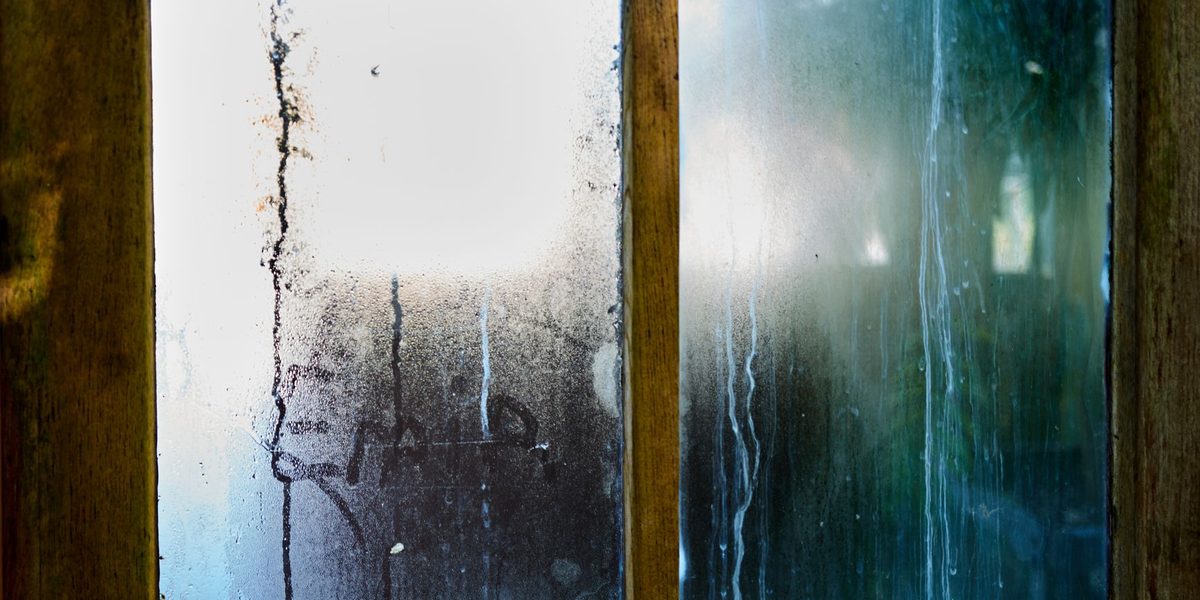
Condensation on the room-side surface of the glass in cold weather is the most common window complaint, and it is usually not the window's fault. Air can hold only so much moisture, and the amount depends on temperature. When indoor air touches glass that is colder than the air's dew point, it sheds moisture right there on the surface. The window is simply the coldest thing in the room, so it collects the evidence first.
That makes interior fog a message about indoor humidity as much as about glass. It appears first in bedrooms at night, where sleeping people humidify a closed room, and in kitchens and bathrooms, the moisture factories of a home. Light misting at the glass edges on the coldest mornings is common, because the edge of an insulated unit conducts heat faster than its center. Persistent heavy fog, water pooling on sills, or mold in the corners means the balance has tipped: either the air is carrying too much moisture, or the glass is running too cold for the home's habits, and the fix lies with ventilation and humidity as often as with the window itself.
Fog Between the Panes: A Seal Has Failed
Fog or a milky haze trapped between the panes of a double-glazed window is a different story entirely, and this one is the window's fault. The insulating gap is sealed at the factory, with a drying agent hidden in the spacer around the edges to keep the captive gas perfectly dry. Over years of expansion and contraction through hot afternoons and cold nights, the seal flexes countless times, and eventually it can crack. Humid outside air then pumps slowly in and out of the gap with every temperature swing.
At first, the drying agent absorbs the incoming moisture and nothing shows. Once it saturates, moisture begins condensing on the inner surfaces of the gap, where no cloth can ever reach. The fog that comes and goes with the weather, then becomes a permanent haze or mineral staining, is the visible timeline of that process. A failed seal does not mean the window is about to fall apart, but its insulating gas is gone or going, its clarity will not return, and the practical remedy is replacing the glass unit or the window, a job for a professional rather than a sealant tube.
Fog on the Outside: Oddly, a Compliment
Dew on the exterior surface of a window on a humid morning confuses many homeowners into suspecting a defect. It is the opposite. Exterior condensation means the outer pane stayed cold overnight because the window insulated so well that indoor heat never reached it, exactly like dew forming on a well-insulated car windshield but not on the warm hood. It typically appears on the most efficient windows, in humid seasons, and burns off as the morning warms. No action is needed beyond appreciating the irony.
The same logic explains why older, leakier windows in the same house stay clear on those mornings: enough indoor heat escapes through them to keep the outer glass warm and dry. Exterior dew is therefore a rough field test you can run for free. Walk the house on a still, humid morning and note which windows are misted and which are clear; the misted ones are holding heat in, and the clear ones are quietly exporting it.
Drafts: Real Leaks and Phantom Ones
Window drafts come in two species, and they call for different responses. Real air leaks happen around the assembly: worn weatherstripping where the sash meets the frame, a latch that no longer pulls the sash tight, shrunken caulk at the exterior trim, or, most invisibly, uninsulated gaps between the window frame and the wall framing hidden behind the interior casing. These show as measurable moving air, often strongest on windy days, and they carry moisture and dust along with cold.
The phantom draft needs no gap at all. Room air cools against the cold glass, grows denser, and slides downward, producing a steady cool current at floor level that feels exactly like a leak. You can tell them apart with a candle flame or a ribbon on a calm-versus-windy day: a true leak flutters with the wind, while convection flows gently regardless. The distinction matters because weatherstripping cures one and only warmer glass, heavier curtains, or a heat source under the window cures the other.
Final Thoughts
Windows reward a little literacy. Fog on the inside is your indoor air announcing its humidity; fog between the panes is a seal confessing its age; fog on the outside is a well-made window doing its job; and a draft may be a real gap or just cold glass rehearsing gravity. None of these signals requires panic, but each points somewhere specific: to a bathroom fan, a glass unit, a strip of weatherseal, or nowhere at all. Read the glass and you will usually know which conversation to have, and with whom, before any money changes hands. Few parts of a home explain themselves so willingly, if you know the language.