From the street, a roof looks like a single surface: shingles, maybe a chimney, done. In reality it is a layered system in which every component has one job, and the shingles you can see are only the outermost player. A roof does not merely block rain; it manages gravity, wind, sunlight, temperature swings, and moisture from both outside and inside the house. Understanding the layers and how they cooperate turns roof talk from intimidating to intuitive, and makes the symptoms a roof produces, stains, curls, drips, and dams, suddenly legible.
The Deck: The Roof's Skeleton and Skin
Beneath everything lies the structure: rafters or engineered trusses that give the roof its shape and carry its weight down into the walls. Across them runs the decking, usually large wood panels, which turns the skeleton into a continuous surface. Everything else on the roof is fastened to this deck, which makes its condition foundational in the most literal sense.
The deck is also the layer that suffers silently. A small leak that never shows up on a ceiling can still soak into decking for years, softening it and rusting fasteners. When roofers insist on inspecting from above, or when a replacement uncovers surprise rot, this is the layer in question. A roof is only as sound as the wood under it.
Underlayment: The Backup Plan
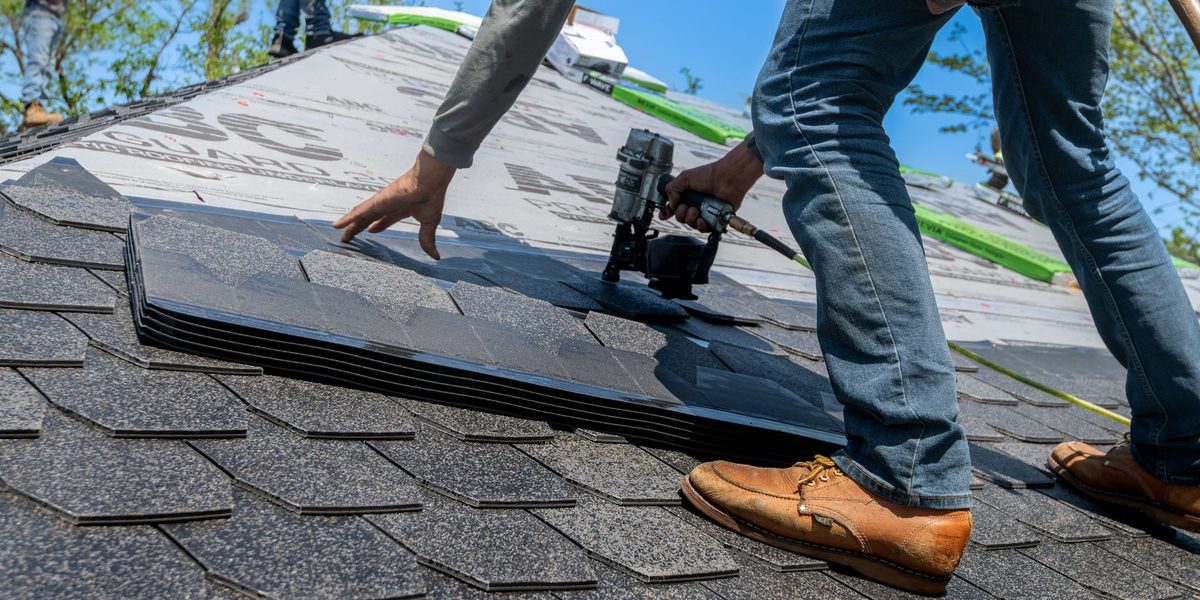
Directly over the deck goes the underlayment, a tough sheet of felt or synthetic material covering the entire surface. Its job is humble and vital: it is the backup barrier for any water that gets past the shingles, whether driven by wind, backed up behind ice, or sneaking through a damaged spot. Along eaves and in valleys, many climates call for an upgraded version, a self-adhering membrane that seals around the nails driven through it, precisely because those are the areas where standing or backed-up water is most likely.
The underlayment explains why a roof can lose a shingle in a storm and shrug it off for a while. It also explains why age matters even when shingles look passable: an underlayment that has grown brittle no longer provides the safety margin the system was designed around.
Shingles: Armor That Works by Overlap
The visible layer, whether asphalt shingles, metal panels, tile, or wood shakes, works on a principle old enough to predate plumbing: overlap. Each course of shingles laps over the one below, so water flowing downhill always lands on top of the next layer, never behind it. There is no waterproof seal across the whole roof; there is only geometry, arranged so gravity does the work.
This is why roof pitch matters so much. Steep roofs shed water quickly and forgive minor imperfections; shallow roofs let water linger and travel sideways, demanding tighter detailing and different materials. It is also why wind is a shingle's real enemy. Wind lifts the overlaps, breaks the adhesive bonds between courses, and can drive rain uphill beneath them, defeating the geometry that makes the whole system work.
Flashing: Where Roofs Actually Leak
Anywhere the roof plane is interrupted, by a chimney, a plumbing vent pipe, a skylight, a dormer, or a wall rising above it, overlapping shingles cannot finish the job. Those transitions are sealed with flashing: shaped pieces of metal that bridge the joint and direct water back onto the shingle surface. Valleys, where two roof planes meet and concentrate their runoff into one channel, get their own flashing or woven treatment for the same reason.
Ask roofers where leaks actually happen and the answer is rarely the middle of a field of shingles. It is the flashing: bent, corroded, pulled loose by movement, or improperly layered during a past repair. A stained ceiling directly below a chimney or bathroom vent is practically an arrow pointing at a flashing detail. Understanding this focuses attention where it belongs when a roof is inspected.
Ventilation: The Roof's Breathing System
A well-built roof also manages air. The classic arrangement pairs intake vents low in the soffits, the underside of the overhangs, with exhaust vents at the ridge, the peak. Because warm air rises, the attic continuously draws in outside air at the eaves and exhales it at the top, keeping the attic close to outdoor temperature year-round.
This slow breathing does two jobs. In summer, it carries off heat that would otherwise bake the shingles from below and load the ceilings with warmth the air conditioner must fight. In winter, it flushes out moisture rising from the living space before it can condense on cold framing, and it keeps the roof surface cold, which matters more than it sounds. Blocked soffit vents, often from insulation pushed too far into the eaves, quietly disable the whole system.
You can often read the state of attic ventilation without leaving the ground. An attic that feels like an oven on a warm day, rust on nail tips visible from inside, frost on the underside of the deck in winter, or a musty smell at the attic hatch are all signs the airflow is losing to heat or moisture. Because the intake and exhaust work as a pair, adding more exhaust without clear intake accomplishes little; the system only breathes when both ends are open.
Ice Dams: A Ventilation Story in Disguise
Ice dams look like a gutter problem, but they are usually a heat problem. When escaping indoor heat warms the upper roof, snow there melts and trickles down. At the cold overhangs, which sit beyond the heated house, that water refreezes into a growing ridge of ice. Meltwater then pools behind the ridge, and pooled water has time to work backward under the shingle overlaps, exactly the situation the geometry cannot handle. That is when water enters ceilings and walls.
The chain of causes runs backward from the icicles: warm roof, which means heat is escaping the living space, which means air leaks and thin insulation at the attic floor, compounded by weak ventilation that fails to flush the warmth away. This is why the durable fixes for ice dams live in the attic, sealing and insulating and venting, not at the gutter line where the symptom appears.
Reading Common Roof Symptoms
With the layers in mind, common roof signals become readable:
- Curling or cupping shingles suggest advanced age or chronic heat from a poorly vented attic below.
- Granules collecting in gutters are asphalt shingles shedding their protective surface, normal in small amounts, a countdown in large ones.
- Dark streaks running down the roof are typically algae, cosmetic more than structural.
- A wavy or sagging roofline points below the shingles, toward decking or framing concerns worth professional eyes.
- Ceiling stains after wind-driven rain but not ordinary rain hint at flashing or lifted shingles rather than a hole.
None of these observations replaces an inspection, but they change the conversation. A homeowner who can say where the water shows up and when is handing a roofer half the diagnosis.
Final Thoughts
A roof is a cooperative of layers: framing for strength, decking for continuity, underlayment for insurance, shingles for armor, flashing for the tricky transitions, and ventilation to manage heat and moisture from below. Water is patient, and the system is designed so that gravity, overlap, and airflow beat that patience decade after decade. Learn the layers and you stop seeing a roof as a single mysterious surface, and start seeing it as a machine, one whose symptoms nearly always tell you which part is asking for attention, long before the drip reaches the dining room.