Morocco rewards prepared travelers more than almost any destination. Arrive without context and the medina can read as chaos: a maze of alleys, a chorus of invitations, a wall of color and noise. Arrive understanding how the pieces fit — why old cities are built as labyrinths, why haggling is conversation rather than combat, why tea is poured from a height of two feet — and the same streets resolve into one of the most coherent and gracious cultures in the Mediterranean world. This guide explains the systems behind the sensations, so that your first hour in Marrakech or Fes feels less like being lost and more like being let in.
How to Read a Medina
The medina — the walled old city at the heart of Moroccan towns — was not designed to confuse you, though it will. Its logic is climatic and social. Narrow, winding lanes stay shaded and cool in fierce summers; dead-end residential alleys create quiet, semi-private zones where neighbors watch over each other; and the whole city historically organized itself around the great mosque, with the cleanest trades (books, perfume) closest to it and the smelliest (tanneries) pushed to the edges. Fes el-Bali, the medina of Fes, is often described as the largest car-free urban area in the world, still functioning much as it has for a millennium.
Practical navigation follows from this. Main commercial arteries connect the gates to the center; if you stick to streets with shops, you are on a through-route and will eventually reach a landmark. Getting mildly lost is part of the experience and rarely lasts long. Young men may offer to guide you, sometimes insisting a street is “closed” — a polite, firm “no thank you” (la, shukran) and continued walking settles it. If you do accept help, a small tip is expected; that is not a scam but an informal economy at work.
The Souk and the Art of the Haggle
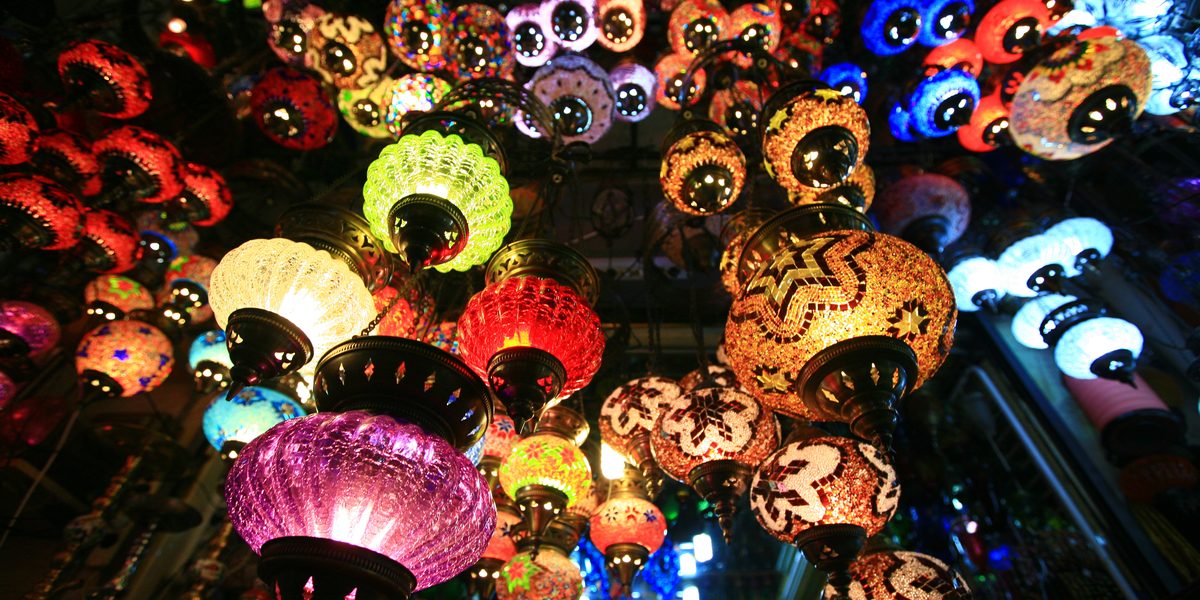
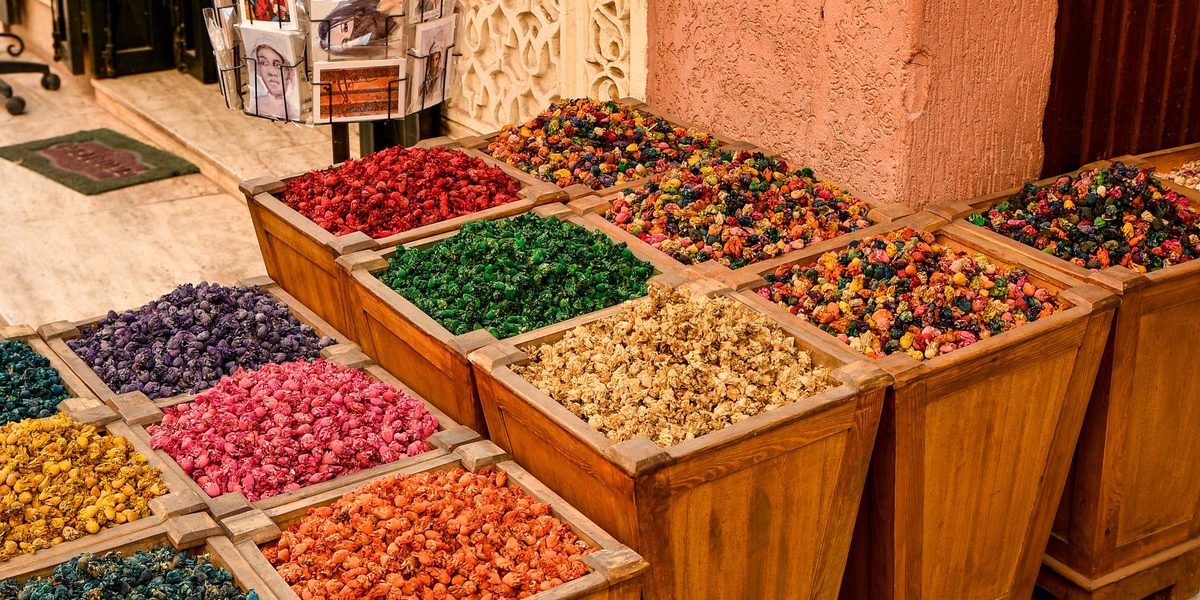
Souks are the medina’s market streets, traditionally clustered by trade — a lane of slipper-makers, a lane of coppersmiths, a square of dyers with skeins of wool drying overhead. Fixed prices are a modern invention; for crafts, carpets, leather, and lanterns, negotiation is the norm, and it helps to understand what haggling actually is in Morocco: a social ritual with rules, not a battle with a winner and a loser.
- Only begin bargaining if you are genuinely interested; negotiating a price and then walking away is the real rudeness.
- Expect an opening price well above the target — countering at a third to half is conventional, delivered with a smile, never irritation.
- Accept the mint tea if a carpet seller offers it; it obliges you to courtesy, not to purchase.
- The gap closes through conversation — where you are from, how the item was made. Enjoy this part; it is the point.
- A fair price is one you are happy to pay. Grinding out the last few dirhams from an artisan is poor form; overpaying slightly with good grace is remembered kindly.
- Food, water, and clearly posted prices are not negotiable.
Learn to say salam alaykum on entering a shop and shukran on leaving, whatever happens in between. Greetings matter enormously in Morocco; transactions that begin with a human exchange go differently than those that begin with pointing.
The Riad: Architecture Turned Inward
From the alley, a riad is nothing: a high blank wall, a heavy studded door. Step through and the logic of Moroccan domestic architecture reveals itself — the building faces inward, arranged around a courtyard open to the sky, often with a fountain, orange trees, and galleries of carved cedar and zellige tilework rising two or three stories to a roof terrace. The word riad comes from the Arabic for garden, and the form solves several problems at once: privacy in a dense city, cool air pooling in the shaded court, and a family life conducted around its own private piece of sky.
Many riads have been restored as guesthouses, and staying in one is the single best way to understand the old city, because you live the rhythm the architecture was designed for — noise and commerce outside, birdsong and running water within. The craftsmanship you see is a living tradition: zellige mosaic chipped by hand into geometric constellations, tadelakt polished plaster, carved plaster friezes, and painted cedar ceilings, skills passed through workshops in Fes and Marrakech for centuries. Do note that riad rooms open onto the courtyard rather than outward, so sound carries; the trade is atmosphere for acoustics, and most travelers consider it a bargain.
Mint Tea: The Ritual That Runs the Country
Moroccans call it atay, foreigners call it Berber whisky, and everyone drinks it constantly: green tea packed with fresh spearmint and sweetened generously, brewed in a curved silver pot and poured from dramatic height into small glasses. The high pour is not showmanship for tourists — it aerates the tea, raises a delicate foam considered the mark of a proper glass, and cools the stream on the way down. Preparing tea is traditionally an honor, often performed by the host or the head of the family, and rushing it would defeat the purpose.
Tea is Morocco’s idiom of hospitality. It appears when you check into a riad, when a negotiation gets serious, when you visit anyone at all. Accepting a glass accepts the relationship; refusing outright can land coldly, though sipping slowly and declining refills is perfectly fine. A well-known saying holds that the first glass is gentle as life, the second strong as love, and the third bitter as death — a poetic way of noting that the pot steeps as it sits, and that a proper tea session is meant to last three glasses’ worth of conversation.
Amazigh Heritage: The Older Morocco
Long before Arabic arrived, Morocco was — and remains — the land of the Amazigh, the indigenous peoples of North Africa often called Berbers, though many prefer Amazigh, meaning free people. A large share of Moroccans have Amazigh roots, the Tamazight language is co-official alongside Arabic and taught in schools, and its striking geometric script, Tifinagh, appears on public buildings. The heritage is oldest and strongest in the Atlas Mountains, the Souss valley, and the pre-Saharan south.
Travelers meet Amazigh culture everywhere, sometimes without realizing it: in the bold diamond motifs woven into rugs, each region with its own vocabulary of symbols; in silver jewelry and the fibula pins that fasten traditional dress; in earthen kasbahs and fortified granaries called agadirs; in couscous itself, an Amazigh dish before it was a national one. Weekly rural markets in the Atlas remain the authentic ancestors of the urban souks. Showing awareness of this layer of Morocco — even just knowing the word Amazigh — is warmly received, because it acknowledges a history older than any dynasty.
The Hammam: Bathing as Community
The hammam, or public steam bath, is the medina’s other great communal institution, historically paired with the neighborhood mosque, bakery, and fountain as basic urban equipment. Locals go weekly, and the traditional sequence is unhurried: warm through in progressively hotter steam rooms, be scrubbed vigorously with a rough kessa glove and black olive-oil soap until an alarming amount of skin rolls away, rinse with buckets of water, and emerge feeling newly issued.
Visitors can choose between authentic neighborhood hammams — inexpensive, sociable, bring your own soap and towel — and polished spa versions attached to riads, which cost more but ease first-timers in gently. Etiquette essentials: sexes bathe separately or at different hours, modesty garments are worn (underwear or a swimsuit bottom), and in local hammams it is normal for an attendant to scrub you with brisk, impersonal thoroughness. Go once as a curiosity and you may find, as with the tea, that it becomes the habit you miss most at home.
Final Thoughts
Morocco’s surfaces are dazzling, but its deeper pleasure is coherence: the medina, the souk, the riad, the tea, and the hammam are one system — a way of organizing city life around shade, privacy, craft, and slow hospitality. Add a few courtesies (greet before you ask, dress a shade more modestly than at home, ask before photographing people, eat and pass things with the right hand) and doors open remarkably fast. Come prepared to slow down to the medina’s pace, and Morocco stops performing for you and starts simply including you — which is the far better show.