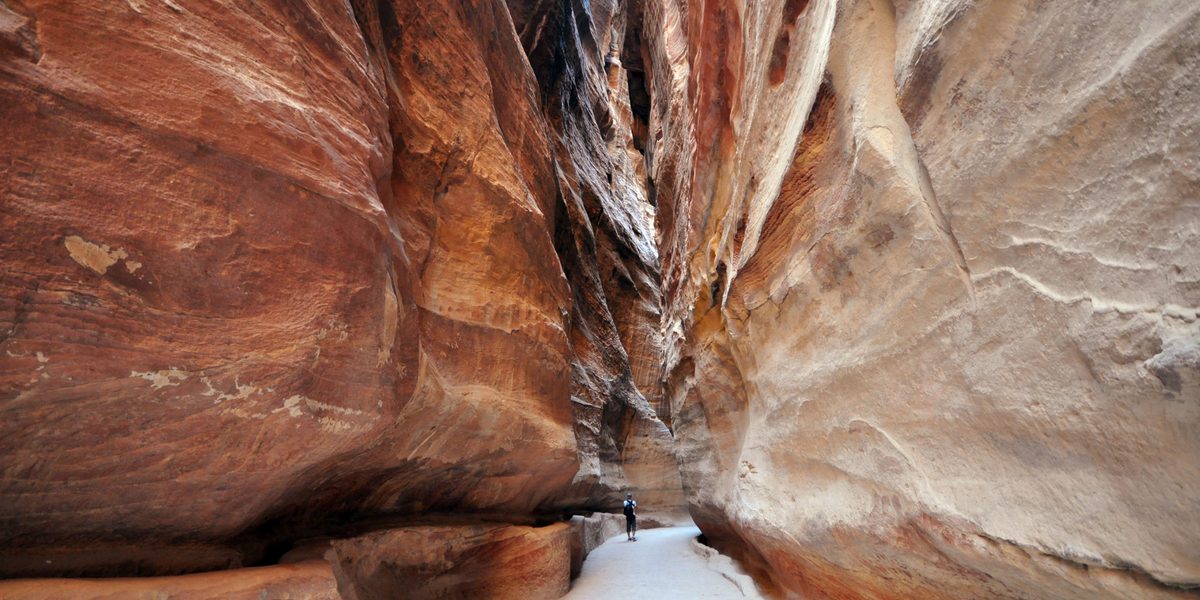
Jordan occupies a sliver of the Middle East between desert and sea, yet it holds an outsized share of the region’s memory. Caravans, empires, prophets, and pilgrims have all crossed this ground, and the country that grew from those crossings is famously calm, welcoming, and proud of its traditions. Most travelers come for a single image, the rose-colored facade of Petra glowing at the end of a canyon, but the deeper rewards belong to those who understand what surrounds that image: the ingenuity of the Nabataeans who carved it, the Bedouin code of hospitality that still shapes daily manners, and the rituals of tea, coffee, and shared food that turn strangers into guests. This primer covers what to know before you go.
Petra and the Genius of the Nabataeans
Petra was not built by a lost civilization of mystics, as the movie-set atmosphere might suggest, but by the Nabataeans, Arab traders who grew wealthy controlling the incense and spice routes that linked southern Arabia with the Mediterranean world. Their capital, hidden among sandstone mountains, was a thriving city of temples, tombs, markets, and homes at its height, sustained by something even more impressive than its architecture: water engineering. In one of the driest landscapes on earth, the Nabataeans carved channels into cliff faces, built dams and cisterns, and captured flash floods, turning scarcity into abundance.
The famous Treasury, the facade you meet at the end of the narrow canyon called the Siq, is actually a tomb, and it is only the opening line of the city. Beyond it stretch a colonnaded street, a massive carved theater, royal tombs the size of apartment blocks, and the Monastery, an even larger facade reached by a long staircase cut into the mountain. Petra eventually declined as trade routes shifted and earthquakes damaged its water systems, but it was never truly lost: Bedouin families lived among the tombs for generations and remain deeply connected to the site today, working as guides, running tea stalls, and keeping its stories alive. Plan more than one day if you can, wear serious footwear, and walk fifteen minutes past any crowd; Petra rewards stamina with silence.
The Bedouin Code of Hospitality
Bedouin culture is the emotional bedrock of Jordan. The Bedouin are the traditionally nomadic peoples of the desert, organized around family and tribe, and although most Jordanians now live settled lives in towns and cities, the values of desert life still set the tone of the whole country. Chief among them is hospitality. In a harsh landscape, refusing a traveler shelter could be a death sentence, so generosity to guests became a sacred duty and a point of family honor. Tradition holds that a guest may stay three days before a host may even ask the purpose of the visit.
For a visitor, this code translates into a stream of invitations: to sit, to drink tea, to share food, to stay longer. These offers are usually sincere rather than transactional, and the polite response is warmth in return. Accept when you can, even briefly, because refusing outright can feel cold. If you must decline, do it graciously, with a hand over your heart and genuine thanks. Compliment the family, ask about the region, and let conversation wander; hospitality here is about time spent, not services rendered.
Tea, Coffee, and the Rituals of Welcome
Two drinks structure Bedouin welcome, and they carry different meanings. Sweet black tea, often brewed with sage or mint over an open fire, is the everyday gesture of friendship, poured generously and refilled without asking. Arabic coffee, called qahwa, is the ceremonial drink: lightly roasted, spiced with cardamom, and served in tiny handleless cups from a long-beaked pot. Etiquette surrounds it. The host pours a small amount, you drink, and the cup may be refilled once or twice; when you have had enough, gently wiggle the empty cup side to side as you hand it back, the traditional signal that you are satisfied. Receive cups with your right hand, and never rush the ritual. In tribal tradition, sharing coffee could seal agreements and settle disputes, so treating it casually misreads its weight.
Wadi Rum: The Desert as Living Culture
South of Petra lies Wadi Rum, a protected desert of red sand, sheer sandstone mountains, and rock arches, often described as looking like another planet. It is better understood as a homeland. Bedouin tribes have herded goats and camels here for centuries, and their descendants now run the camps, jeeps, and camel treks that visitors use to experience the valley. Petroglyphs and ancient inscriptions scratched into the rocks record thousands of years of human passage.
Staying overnight in a Bedouin-run camp is the classic way to understand the place: an evening around the fire, dinner sometimes cooked in a zarb, an underground sand oven, tea passed around, and a sky so dark the stars feel structural. Desert etiquette is simple: take your litter out, ask before photographing people or their tents, and let your hosts lead conversations about family, which are personal terrain.
Mansaf and the Meaning of Shared Food
Jordan’s national dish is mansaf: lamb cooked in jameed, a sauce made from dried fermented yogurt, served over rice on a huge communal platter with flatbread beneath and almonds or pine nuts on top. It is festival food, wedding food, reconciliation food; being invited to share mansaf is a statement of respect. Traditionally it is eaten standing around the platter, using only the right hand, rolling rice and meat into a ball with the fingertips. Guests are honored with the best pieces, and a good host will keep urging you to eat long past fullness; pacing yourself early is wise. Beyond mansaf, Jordanian tables overflow with mezze such as hummus, moutabel, falafel, olives, and warm bread, plus grilled meats and knafeh, a hot syrup-soaked cheese pastry that ends celebrations. Always eat and pass food with the right hand, and expect tea afterward, always.
Dress, Manners, and Everyday Etiquette
- Dress modestly: shoulders and knees covered is a sound baseline for everyone, with looser clothing both respectful and cooler in the heat.
- Greetings matter; take time for hellos and handshakes. Some observant people prefer not to shake hands across genders, so let the other person initiate.
- Public displays of affection are best kept minimal, especially outside resort areas.
- During the Muslim fasting month, avoid eating, drinking, and smoking in public during daylight out of courtesy.
- Ask before photographing people, and accept a refusal cheerfully.
- Haggling in markets is normal and friendly; haggling over a posted restaurant bill is not.
The Dead Sea and the Land Below Sea Level
Jordan’s western edge drops to the lowest dry land on earth, the shore of the Dead Sea. The water is so dense with salt and minerals that swimming becomes floating; you bob on the surface like a cork, usually while reading the traditional souvenir newspaper photo pose. A few practical truths: do not shave the day before, keep the water strictly away from your eyes and mouth, limit soaks to short sessions, and rinse off afterward. The mineral-rich black mud along the shore is a beloved skin treatment, and slathering yourself before a float is part of the experience. The strange, shimmering landscape around the sea, with Wadi Mujib’s canyons nearby, is its own reward at sunset.
Final Thoughts
Jordan is best approached as a culture of the guest. The Nabataeans built their fortune welcoming caravans; the Bedouin built their honor on welcoming strangers; modern Jordanians pour that same instinct into every glass of tea. Come for Petra, absolutely, but arrive knowing the rituals around you, accept the third cup thoughtfully, eat with your right hand, and say yes to the fireside conversation. The monuments are magnificent; the welcome is the culture.