New Orleans has a reputation as America’s party town, and the reputation is not wrong, exactly. It is just incomplete. The music in the streets, the parades that materialize on a Sunday afternoon, the food that people argue about like theology, and the costumes and beads of Carnival are not entertainment products invented for visitors. They are the surface of a deep, layered culture built over three centuries by French and Spanish colonists, enslaved and free people of African descent, Caribbean migrants, Acadian exiles, and successive waves of newcomers who all left ingredients in the pot. Understanding where the celebration comes from is the difference between visiting New Orleans and actually meeting it.
Creole and Cajun: Two Cultures, Not One
The most common outsider mistake is using Creole and Cajun interchangeably. They are related but distinct cultures with different geographies and histories. Creole culture is urban New Orleans: it grew from the city’s colonial mix of French, Spanish, African, and Caribbean peoples, including the historically significant community of free people of color who shaped the city’s music, building trades, and cuisine. Creole cooking reflects that cosmopolitan port heritage, with tomatoes, cream, and refined sauces; it has been called city food.
Cajun culture, by contrast, is rural southwest Louisiana. The Cajuns descend from Acadians, French settlers expelled from eastern Canada who resettled in the bayous and prairies, where they developed a self-sufficient culture of farming, fishing, and legendary communal cooking. Cajun food is country food: dark roux, smoked meats, rice, and one-pot dishes built for feeding many hands. The two traditions trade ingredients and musicians constantly, and both simmer a gumbo, but locals notice when visitors flatten them into one. A useful shorthand: Creole is the city’s story, Cajun is the countryside’s, and New Orleans itself is fundamentally a Creole town that loves its Cajun cousins.
Where Jazz Comes From
Jazz was not invented in a studio; it was assembled in New Orleans neighborhoods out of everything the city had lying around. The crucial ancestor is Congo Square, the gathering place where enslaved Africans, under the city’s French and Spanish customs, kept drumming, singing, and dance traditions alive on Sundays, preserving West African rhythm in a way almost no other American city allowed. Layer onto that the brass bands of military and funeral processions, the hymns and shouts of Black churches, European dance music and opera, Caribbean rhythms arriving through the port, and ragtime piano, and by the early twentieth century the city’s musicians were improvising something new: collective, syncopated, blues-inflected, and joyous.
The tradition never fossilized. Brass bands still come up through school marching programs and neighborhood social halls, and the city treats live music as infrastructure rather than decoration. To hear it honestly, favor small clubs and street corners over souvenir-shop stages, tip musicians generously, because tips are livelihood here, and listen as much as you photograph.
Second Lines: The Parade as a Way of Life
A second line is a moving neighborhood party with a brass band at its heart, and it is one of the city’s most distinctive institutions. The name describes the structure: the first line is the band and the members of the social aid and pleasure club hosting the parade, decked out in matching suits, sashes, and decorated umbrellas; the second line is everyone who falls in behind, dancing. These clubs are Black benevolent societies with deep roots, organizations that historically pooled resources for members’ medical care and funerals, and their annual parades are proud community celebrations, not performances staged for tourism.
The related tradition of the jazz funeral follows the same emotional logic: solemn dirges accompany the procession, and after the farewell the music turns exuberant, celebrating the life rather than mourning the death, with the second line dancing behind. If you encounter either, you are welcome to join the second line respectfully: follow, dance, keep clear of the club members and the family at a funeral, and never treat the front of the parade as a photo backdrop. Joining is participation in someone’s tradition; act like a good guest inside it.
The Food: Gumbo, Beignets, and Sacred Arguments
New Orleans food is a history lesson served hot. Gumbo is the emblem: a slow-built stew over rice that begins with a roux and often okra, a plant and word carried from West Africa, sometimes thickened with filé, ground sassafras from Choctaw tradition, and filled with seafood or chicken and sausage depending on the cook. Every family recipe is considered correct by that family and suspicious by all others, and asking two locals where to find the best gumbo is a reliable way to start a delightful argument.
Beyond gumbo, the canon runs deep: red beans and rice, traditionally a Monday dish from laundry-day thrift; jambalaya, cousin to Spanish and West African rice dishes; po’boys, overstuffed sandwiches on airy French bread born of workingman generosity; étouffée, oysters, and boiled crawfish in season, eaten communally over newspaper. For sweets, the beignet reigns: a square of fried dough buried under powdered sugar, eaten hot with café au lait made with chicory, a coffee habit inherited from French frugality that became a beloved flavor. Practical wisdom: never wear black to eat a beignet, never inhale as you bite, and treat the sugar blizzard as part of the experience.
Reading the French Quarter
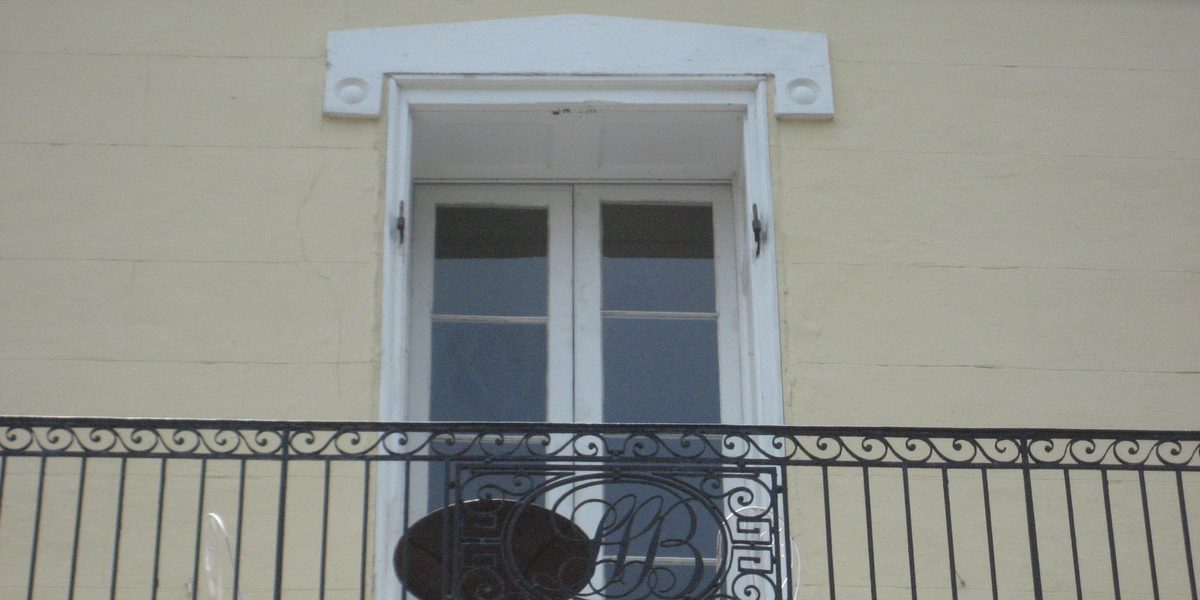
The French Quarter is the city’s oldest neighborhood, and its architecture rewards a slower look. The famous cast-iron balconies and lacy galleries, the pastel stucco, the hidden courtyards, and the arched carriageways actually reflect Spanish colonial rebuilding as much as French origins, since fires destroyed most of the earliest French city and the Spanish administration oversaw its reconstruction. The result is a Caribbean-feeling streetscape adapted brilliantly to heat: thick walls, tall shuttered windows for cross-breezes, shaded galleries over the sidewalks, and lush courtyards that act as private cooling wells.
Look for the details locals love: hitching posts and mounting blocks, hand-lettered tile street names, garde de frise spikes on balcony corners, and the distinct Creole townhouse and cottage forms. Beyond the Quarter, the shotgun house, one room wide and several deep, is the city’s other great architectural signature, dressed in colors that make whole blocks look celebratory. Remember that people live behind those shutters; admire from the sidewalk, keep noise down on residential blocks at night, and never open a courtyard gate uninvited.
Mardi Gras: More Than One Big Day
Mardi Gras is not a single wild street party; it is the finale of Carnival, a whole season that begins on Twelfth Night after the Christmas holidays and builds through weeks of parades, balls, and king cake, the ring-shaped cinnamon pastry hiding a tiny baby figurine that obligates its finder to supply the next cake. Parades are produced by krewes, private organizations that spend the entire year building floats and costumes, and each krewe has its own traditions, signature throws, and personality, from satirical to majestic. Families stake out parade routes with ladders for children, and the beloved throws, beads, cups, doubloons, and hand-decorated treasures, are caught, not grabbed. The deepest tradition of all belongs to the Black Masking Indians, often called Mardi Gras Indians, whose hand-sewn beaded suits, made anew each year, honor a long history of resistance and mutual respect between Black and Native communities; when they appear, watch with reverence. And a local truth worth knowing: the raucous scenes visitors associate with Carnival occupy a few blocks, while the real thing is profoundly family-oriented.
How to Be a Good Guest
- Speak to people. Greetings from strangers are normal and expected; coldness reads as rudeness.
- Tip well, especially musicians, service workers, and anyone who makes your day better.
- Do not treat neighborhoods, funerals, or parades as photo sets; ask before pointing a camera at people.
- Learn the local pronunciations gently; residents will happily coach you.
- Take the city’s resilience seriously: its people have rebuilt through floods and hardship, and jokes about disasters land poorly.
- Pace yourself like a local: the celebration is a marathon culture, not a sprint.
Final Thoughts
New Orleans celebrates because its history taught it to hold joy and hardship in the same hands. The second line dances behind a funeral, the gumbo pot holds three continents, and the balconies were built after fires. Come for the party if you like, but learn what the party means, and the city will treat you less like a tourist and more like a neighbor who finally showed up.