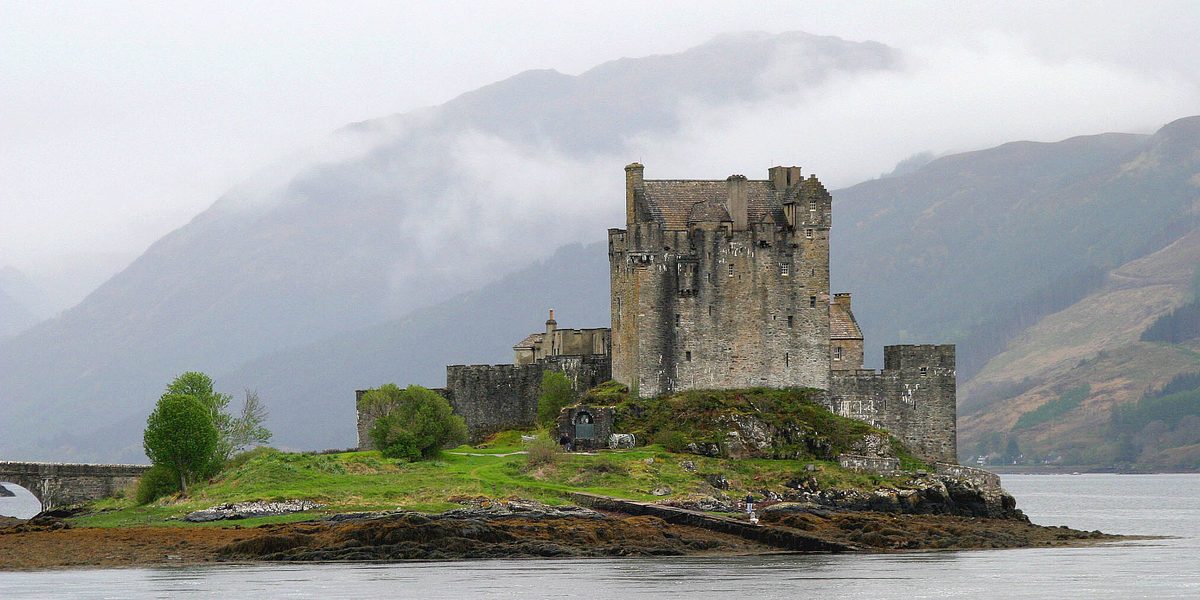
The Scottish Highlands look, at first glance, like pure scenery: glens carved by ancient ice, lochs black as strong tea, castles standing guard over sea inlets, and hillsides purple with heather. But the emptiness that makes the landscape so photogenic is not natural, and the romance that surrounds it is not simple. This is a region shaped by a clan society that rose and was deliberately dismantled, by a language that still whispers through every place name, and by a crofting way of life that stubbornly survives. Understanding these layers changes what you see out the window. The Highlands stop being a backdrop and become a story, one that is still being written by the people who live there.
Clans: Family as a Form of Government
For centuries the Highlands ran on a system that was part extended family, part private state. A clan, from the Gaelic word for children, gathered people under a chief who offered land and protection in exchange for loyalty and, when needed, fighting men. Cattle were wealth, cattle raiding was practically a sport, and feuds between neighboring clans could smolder for generations. Names like MacDonald, Campbell, MacLeod, Cameron, and Fraser were not merely surnames but political affiliations mapped onto the landscape, and many bearing a clan name were tenants who adopted it rather than blood relations, which says everything about how belonging worked.
The system died violently. After the final Jacobite rising ended in defeat at Culloden, the government set out to break clan society for good: chiefs lost their judicial powers, weapons were banned, and for a time even Highland dress was outlawed. Chiefs became ordinary landlords, and many later cleared their tenants to make way for sheep in the notorious Clearances, scattering Highland families to the coasts, the cities, and across the oceans. That is why the glens are so empty, and why millions of people around the world today trace their roots to places that now hold more sheep than residents. The tartans and clan gatherings you will encounter are a revival, part memory and part invention, but the loyalty they express is entirely real.
Gaelic: The Language Beneath the Map
Scottish Gaelic was the everyday tongue of the Highlands for a thousand years, and though its native heartland has shrunk toward the western islands, it never disappeared. You will hear it in songs, see it on bilingual road signs, and, above all, read it in the landscape, because Highland place names are essentially a Gaelic vocabulary lesson. Glen means valley, loch means lake, ben means mountain, strath a broad river valley, kyle a narrow strait, inver a river mouth, and eilean an island. Learn a dozen such words and the map begins to speak: names stop being tongue-twisters and become little descriptions of the land, coined by people who knew every fold of it.
A few phrases travel well, too. Slàinte mhath, pronounced roughly slahn-juh vah, means good health and is the standard toast over a dram. Fàilte means welcome, and you will see it on signs at village boundaries. No one expects visitors to speak Gaelic, but showing interest in it lands warmly, because the language carries the region's music, poetry, and memory in a way nothing else does.
Crofting: Small Farms, Long Memory
A croft is a small agricultural holding, typically a few fields worked alongside shared common grazing on the hill, and crofting is the way of life built around it. The system emerged from the upheavals of the Clearances, when displaced families were resettled on small coastal plots, and it was later protected by hard-won legal rights that gave crofters security their ancestors never had. A crofter might keep sheep and a few cattle, cut hay, grow potatoes, and combine it all with other work, fishing, weaving, tourism, because the croft was rarely meant to be a full living on its own. The famous tweed of the Hebrides and the knitting traditions of the islands grew directly out of this household economy.
For travelers, crofting explains the look of the inhabited Highlands: scattered white cottages strung along a single road, fenced strips running down to the shore, sheep grazing to the very edge of the tide, and ruined stone gables of abandoned townships standing in the bracken. Those ruins deserve a respectful pause. They are not picturesque decay; they are the housing stock of a society that was pushed out, and their descendants may live in the bungalow next door.
Whisky: The Water of Life
Whisky's very name comes from the Gaelic uisge beatha, water of life, and the Highlands and their island fringe produce some of the most distinctive drams on earth. The process is elemental: barley, water, and yeast, distilled in copper stills and left to sleep in oak casks for years while the climate does its slow work. Regional character is real, with mainland Highland malts often rounded and heathery while some island and coastal whiskies carry smoke and sea salt from peat-dried barley, and every distillery insists, correctly, that its own water and stills make it unrepeatable. A distillery tour is one of the best cultural experiences the region offers, ending with a tasting where you will learn the local truth that a few drops of water open up the flavor.
Drinking etiquette is relaxed but has its points of pride. A dram is savored, not shot back; asking for a mixer in a fine single malt will earn raised eyebrows; and the proper response to a raised glass is slàinte mhath. If a local buys you a dram, the round system is in effect, and reciprocating is good manners.
Ceilidhs, Music, and the Social Highlands
The word ceilidh originally meant simply a visit, an evening of stories, songs, and news around a neighbor's fire, and it has grown into the Highlands' signature social event: a night of live fiddle and accordion music and communal dancing, held in village halls, hotels, and at weddings. No skill is required. The dances are called aloud, meaning a caller walks everyone through the steps before the music starts, and grabbing a stranger's hand for an eightsome reel is not just allowed but expected. Being visibly terrible at it is half the fun and endears you to the room far more than sitting out.
Music runs deeper than the dance floor. Pub sessions gather fiddlers and singers informally; pipe bands and Highland games bring out caber-tossing, dancing, and massed bagpipes in summer; and Gaelic song, from working rhythms to heartbreak laments, remains a living art. If a quiet singer stands up in a pub and the room hushes, hush with it. That silence is the local form of applause.
Landscape, Weather, and the Right to Roam
Highland weather is famously plural; locals joke about four seasons in an hour, and they are not exaggerating. The Atlantic delivers rain, sun, mist, and wind in rotation, midges, tiny biting insects, swarm on still summer evenings, and conditions on the hills can turn serious quickly. The rules of comfort are simple: waterproofs always, layers of wool or fleece, proper boots for the hills, midge repellent in summer, and no assumption that morning weather predicts the afternoon.
What makes all this walkable is Scotland's remarkable right of responsible access, often called the right to roam, which allows walkers to cross most land and camp wild in small numbers, regardless of ownership, provided they behave responsibly. The bargain has clear terms:
- Leave no trace, take every scrap of litter with you, and camp well away from roads and houses.
- Keep dogs under close control, especially near sheep and ground-nesting birds.
- Use gates where they exist, leave them as you found them, and never damage fences or walls.
- Give farm operations and deer stalking activity a wide berth when signs ask you to.
- Greet fellow walkers; a hello on the hill is Highland protocol.
Final Thoughts
Castles and lochs will fill your camera, but the Highlands reward a deeper kind of attention. Read the Gaelic in the place names, see the Clearances in the empty glens and the crofts in the living townships, take your dram slowly, and let a ceilidh caller talk you into the dance. This is a region where landscape and history are the same subject taught twice. Arrive with waterproofs and curiosity in equal measure, and the Highlands will hand you their real treasure, which was never the scenery alone, but the story underneath it.