Travelers often arrive in Italy’s south expecting one Italian cuisine, only to discover there is no such thing. What Naples calls dinner, Palermo would call a starting point; what Bari does with a handful of flour and water, Calabria would set on fire with chili. Yet beneath the regional rivalries lies a shared philosophy that makes southern Italian food some of the most satisfying eating on earth — and understanding that philosophy, along with a few unwritten rules about meal times and coffee, will transform how you eat there. This is a guide to the ideas behind the plates, region by region, ritual by ritual.
Cucina Povera: The Philosophy of the Poor Kitchen
The master key to the south is cucina povera — literally the cooking of the poor. For centuries, the Mezzogiorno was agricultural, often hard-pressed, and its cooks learned to build flavor without wealth: dried pasta instead of egg-rich fresh noodles, vegetables and legumes at the center of the plate, stale bread reborn as crumbs toasted in oil (the famous “poor man’s cheese”), anchovies and preserved tomatoes carrying whole dishes. Meat was for feast days; ingenuity was for every day.
The result inverts the usual logic of luxury. Southern cooking is not simple because it lacks ambition — it is simple because generations of cooks ruthlessly removed everything that did not earn its place. A plate of spaghetti with garlic, oil, and chili contains four ingredients and no hiding places, which is precisely why it is difficult to make perfectly. When you eat in the south, you are tasting scarcity turned into style. That is also why respect is given to bread (never wasted), to olive oil (the region’s liquid currency), and to the tomato, which found its truest home in southern soil after crossing the Atlantic.
Naples and Campania: The Baroque South
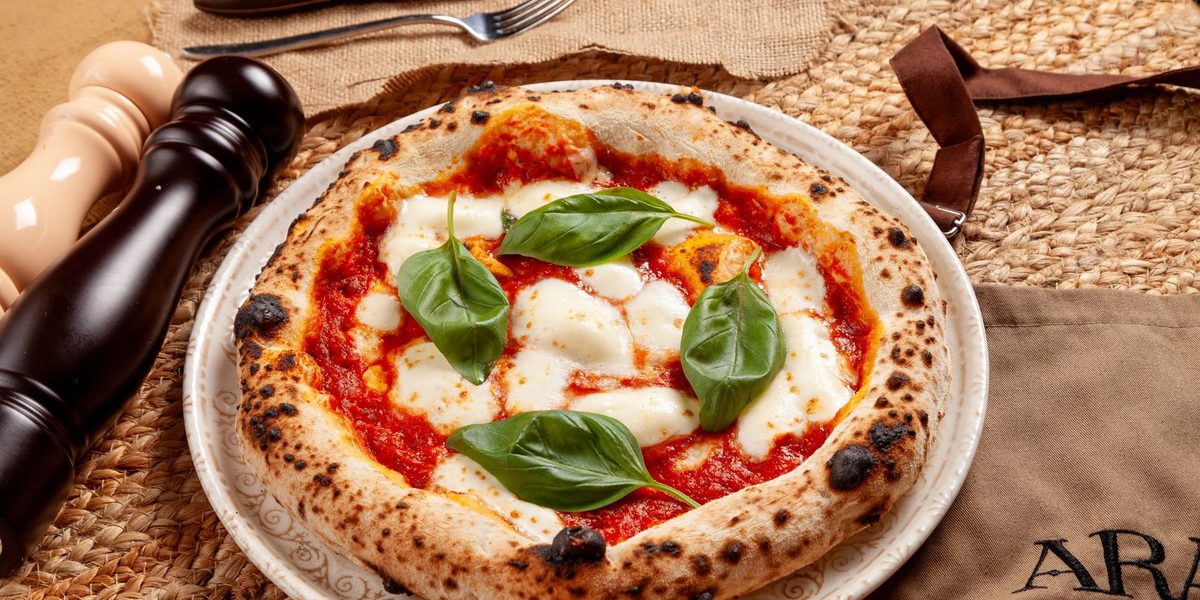
Naples is the south’s flamboyant capital of appetite, and its gifts to the world need little introduction: pizza, born here as street food for a crowded, hungry city; mozzarella di bufala from the plains of Campania; and a pastry culture — sfogliatella’s crackling shells, rum-soaked babà — that treats breakfast as theater. Neapolitan pizza has its own strict identity: a soft, blistered, foldable disc eaten fresh from a fierce oven, closer to a soup course in tenderness than to the crisp versions found elsewhere. Locals eat it with knife and fork or folded “a portafoglio”, like a wallet, walking.
Beyond pizza, Campania cooks the sea and the volcano. Tomatoes grown in volcanic soil around Vesuvius, spaghetti with clams, octopus stewed in its own broth, and friarielli — bitter greens wilted with garlic and chili — define the table. Naples also perfected the ragù that simmers most of a Sunday, guarded by whichever family member is oldest and most opinionated. The city’s food style matches its streets: loud, generous, unapologetic, and far more precise underneath than it first appears.
Puglia: Wheat, Oil, and Vegetables
Puglia, the heel of the boot, is the south’s breadbasket — a flat, sun-hammered plain of wheat fields and more olive trees than people, many of them centuries old and sculpted by wind. Its cuisine is cucina povera at its purest. The signature pasta, orecchiette (“little ears”), is made from just durum flour and water, shaped by hand at astonishing speed by women who still work at tables in the old streets of Bari. The classic dressing is cime di rapa — turnip tops with anchovy, garlic, and chili — a dish that costs almost nothing and tastes like the whole region.
Bread reaches its southern summit in Altamura’s golden, thick-crusted loaves, and burrata — mozzarella’s extravagantly creamy cousin — was invented here as a clever way to use scraps and cream. Along the coasts, Puglia eats raw seafood with an enthusiasm unusual even for Italy: sea urchins, red shrimp, octopus tenderized against the rocks. The region’s table manners are its geography — horizontal, unfussy, vegetable-forward, and anointed with oil at every stage.
Sicily: The Island of Layers
Sicily is less a region than a palimpsest. Greeks planted vines and olives; Arabs brought citrus, sugar, rice, saffron, and the sophisticated sweet-sour register that still defines the island; Normans and Spaniards layered on their own appetites. The result is Italy’s most complex cuisine. Caponata balances eggplant against vinegar and sugar; pasta con le sarde combines sardines, wild fennel, pine nuts, saffron, and raisins in a single dish that reads like the island’s history in one bite; couscous is home cooking in the western port of Trapani.
Sicily also runs Italy’s greatest street-food culture — arancine (saffron rice spheres with molten hearts), panelle chickpea fritters, and Palermo’s markets, which still function like the Arab souks they descend from, all theater and argument and charcoal smoke. And no region takes sweets more seriously: ricotta-filled cannoli filled to order so the shell stays crisp, cassata’s baroque excess, granita with brioche eaten as a legitimate summer breakfast. In Sicily, dessert is not the end of the meal; it is a parallel institution with its own rules and loyalties.
Calabria: Heat and Preservation
Calabria, the mountainous toe, is the south’s wildest kitchen. Its emblem is the chili pepper — peperoncino — strung in scarlet garlands from balconies and worked into nearly everything, most famously ’nduja, a soft, fiercely spicy spreadable pork sausage from the village of Spilinga that has conquered menus worldwide. The heat is not machismo; in a hot climate before refrigeration, chili and salt were preservation technology, and Calabria’s genius for curing, drying, and packing in oil grew from mountain isolation and long winters.
The region’s other treasures follow the same logic of concentration: red Tropea onions sweet enough to eat like fruit, bergamot growing along the Ionian coast and perfuming the world’s tea, dried figs stuffed with walnuts, aged pecorino, and licorice from Rossano. Eating in Calabria feels closer to the land than anywhere else in Italy — fewer restaurants, more farmhouse tables, and a fierce pride in dishes that outsiders only recently learned to pronounce.
Meal Rhythms and Coffee Etiquette
Southern Italy runs on a meal clock visitors ignore at their peril. Lunch is the day’s anchor, generally from about half past noon to two, and in smaller towns much of life still pauses for it. Dinner starts late — eight is early, nine is normal, and in summer later still. Kitchens genuinely close between services; wander in at five expecting a full meal and you will meet polite bewilderment. The structure of a full meal — antipasto, primo (pasta), secondo (meat or fish) with contorni (vegetables), then fruit or dessert — is a menu’s grammar, not an obligation; ordering just a primo or a couple of antipasti is fine nearly everywhere.
Coffee has firmer rules. Espresso is the default — order “un caffè” and that is what arrives, drunk standing at the bar in a minute, often with a glass of water first in the south. Cappuccino is a breakfast drink; ordering one after a meal marks you instantly as a visitor, since milk is considered too heavy on a full stomach. There is no shame in it, but if you want to drink like a local, finish dinner with an espresso — never a “latte”, which will get you a glass of milk. In Naples, ask about the tradition of the caffè sospeso, the “suspended coffee” paid forward anonymously for a stranger who cannot afford one — southern generosity distilled into a single gesture.
Markets: Where the Culture Is Loudest
To understand any southern city, skip a museum and spend a morning in its market. Palermo’s Ballarò and Catania’s fish market roar like auctions; Naples’ Pignasecca threads food stalls through laundry-hung alleys; Bari’s fishermen sell the morning catch directly off the boats. Markets are where the seasons are announced — the first artichokes, the arrival of cherries, the brief reign of fresh figs — and where the region’s food logic is visible: buy what appeared this morning, cook it today, argue about it forever.
A few courtesies apply. Do not handle produce; point, and the vendor selects for you — often better than you would have chosen, occasionally with a free taste and a lecture. Bring small cash, go before noon, and treat the experience as conversation with groceries attached. If a vendor asks how you plan to cook something, that is not small talk; it is quality control.
Final Thoughts
The food of southern Italy is a lesson in how constraint creates character: four regions, one philosophy, endless argument about the details. Eat on the local clock, respect the coffee rules, follow the markets, and order the dish each town is proudest of rather than the one you already know. Above all, understand that when a southerner feeds you, thrift and generosity are not opposites — they are the same tradition, seen from two sides of the table. Arrive hungry and curious, and the poorest kitchen in Europe will show you why it eats better than almost anyone.