Temples are the living heart of Southeast Asia, not museums with incense. In Thailand, Cambodia, Myanmar, and Bali, the shrine you are photographing is also somebody's place of worship, community hall, school, and family history all at once. That is precisely what makes visiting so rewarding, and also why etiquette matters more here than at almost any other kind of attraction. The good news is that the rules are neither secret nor complicated. They flow from a few consistent ideas about respect, modesty, and the symbolism of the body, and once you understand the logic, you can walk into an unfamiliar temple in any of these countries and behave correctly without a checklist. This guide explains the shared foundations first, then the differences that catch travelers by surprise.
The Logic Behind the Rules
Nearly every rule you will encounter comes from two ideas. The first is that sacred space deserves visible humility: covered shoulders and knees, lowered voices, unhurried movement, and bare feet where required. The second is a symbolic map of the body found across Buddhist and Hindu cultures alike. The head is the most honored part of a person, and the feet are the least. From this single principle flow many specific customs: never touch anyone's head, never point your feet at a Buddha image or a person, never step over someone seated on the floor, and never use your foot to gesture at anything. Hands matter too; giving and receiving with the right hand or both hands is polite, and pointing with a single finger is rude nearly everywhere, so gesture with an open hand instead.
Once you internalize this map, unfamiliar situations solve themselves. Sitting on a temple floor? Tuck your feet behind you or to the side, in the position locals call the mermaid pose, rather than stretching them toward the altar. Passing an elderly worshipper seated in prayer? Lower your head slightly as you go by. These small physical courtesies communicate respect louder than words in any language.
Dress Codes: What to Wear and What to Carry
The regional baseline is simple: shoulders covered, knees covered, for all genders. Tank tops, short shorts, leggings worn as trousers, and see-through fabrics will get you turned away at stricter sites, while looser rules apply at small neighborhood shrines. Rather than gambling, carry a light scarf or sarong in your day bag; it weighs nothing and converts any outfit into an acceptable one. Loose, breathable clothing in light colors is also simply more comfortable in tropical heat than the clothes it replaces.
Bali adds its own layer. At Balinese Hindu temples, a sarong wrapped around the waist and often a sash tied over it are required regardless of how long your trousers are, because the sarong is ceremonial dress, not merely modesty covering. Most major temples lend or rent them at the entrance. Myanmar sits at the strict end for footwear, as you will see below, and Thailand's royal temple complexes are the strictest about clothing overall, sometimes lending wraparound garments to underdressed visitors. Hats and sunglasses come off inside shrine buildings everywhere.
Shoes: The Universal Rule With Local Variations
Shoes come off before entering any building that houses a Buddha image or Hindu shrine. That much is constant. The variation lies in where the barefoot zone begins. In Thailand and Cambodia, you generally remove shoes at the door of the shrine hall itself, and socks are usually acceptable. In Myanmar, the barefoot rule extends to the entire pagoda platform, including long marble walkways and courtyards, and it means truly barefoot, with socks and stockings removed as well. Midday stone can be scorching, so plan pagoda visits for morning or late afternoon and learn the local habit of walking in the shaded strips.
Practical tips make this painless. Wear slip-on sandals rather than laced boots, carry a small bag for your shoes at busy sites where leaving them outside feels risky, and step over thresholds rather than on them, since raised doorsills carry their own significance in many traditions. Watching where locals shed their footwear is the most reliable signal of all.
Interacting With Monks
Monks in saffron, ochre, or crimson robes are everywhere in Buddhist Southeast Asia, and most are friendly and curious, especially students eager to practice English. Basic protocol keeps interactions comfortable. Greet with the local pressed-palms gesture rather than a handshake. Keep your head lower than a senior monk's when passing close by, at least symbolically, with a slight bow. Offer or receive anything with both hands. Women should know one firm rule: monks in the Theravada traditions of Thailand, Cambodia, and Myanmar do not touch women or take objects directly from their hands, so items are placed on a cloth, a table, or handed via a man. This is doctrine about monastic discipline, not a judgment about anyone present, and handling it gracefully is appreciated.
On buses and trains, seats reserved for monks should be left free, and it is courteous to give up a seat so a monk need not stand pressed among passengers. If you want a photograph with a monk, ask first; most will happily agree, and asking is the difference between an encounter and an intrusion.
Respecting Buddha Images
A Buddha image is treated as worthy of reverence whether it is a national treasure or a weathered roadside statue, whole or broken, ancient or new. Several rules follow. Never climb on statues, ruins that contain images, or altar platforms, even for a better camera angle. Never pose disrespectfully beside an image, and avoid turning your back directly to a principal Buddha for a selfie; kneel or stand at an angle instead. Keep your head lower than the image when seated near it, and never point your feet toward it. In Thailand especially, treating images casually is taken seriously, and this respect extends to Buddha tattoos and Buddha-printed clothing, which can cause genuine offense. When leaving a shrine hall, many locals back away a few steps before turning, a graceful habit worth copying at important altars.
Photography Manners
Photography is usually permitted in courtyards and often inside shrine halls, but permission is the operative word. A short set of habits keeps you on the right side of it:
- Look for signs first; a crossed-out camera means exactly what it says, and flash is widely banned near murals and gilded images.
- Never photograph people at prayer without asking, and ask before close-up portraits of monks, nuns, or novices.
- Keep drones grounded near temples unless you have explicit permission, since both the noise and the overhead position are offensive.
- Skip photography entirely during active ceremonies in Bali unless invited, and never stand in front of praying worshippers to shoot the altar.
- Put the camera away in any hall where everyone else has; some spaces are simply meant for eyes only.
Country Differences at a Glance
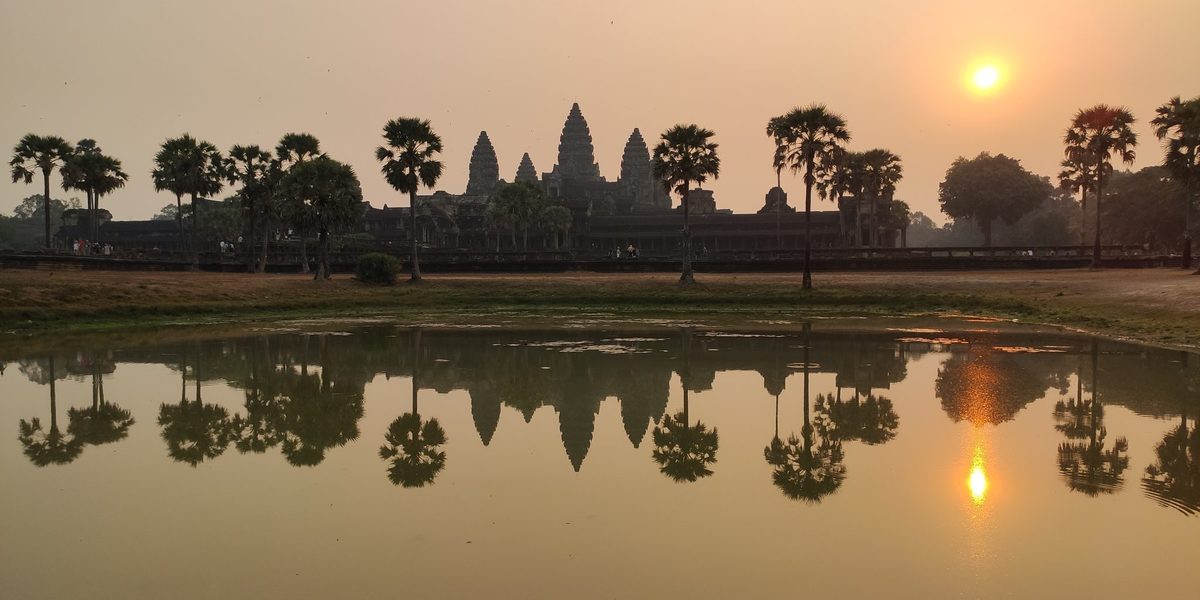
Thailand is polished and regulated at its famous royal temples, with enforced dress codes and clear signage, while village temples are relaxed and welcoming. Cambodia's great temple ruins are archaeological parks, but they remain active sacred sites where incense still burns, so modest dress and image etiquette still apply among the carved stones. Myanmar is the most devout in daily practice; expect full barefoot platforms, conservative dress, and worshippers at all hours. Bali is Hindu rather than Buddhist, which changes the details: sarongs and sashes are required, menstruating women are traditionally asked not to enter, offerings lie on the ground everywhere and must not be stepped on, and temple festivals may close sites to visitors entirely. When in doubt in any country, arrive covered, shoes ready to slip off, and voice low; that formula works everywhere.
Final Thoughts
Temple etiquette in Southeast Asia is not a test designed to trip up outsiders. It is an open invitation to participate in a shared atmosphere of respect, and locals extend enormous goodwill to visitors who visibly try. Cover up, shed your shoes, keep your feet humble and your head bowed, ask before photographing, and treat every image as if its worshippers were watching. Do that, and the temples stop being scenery and become what they have always been: places that quietly change the people who enter them.