Most cities have history; Istanbul has strata. Dig anywhere, literally or culturally, and you pass through Ottoman palaces, Byzantine churches, Roman walls, and Greek foundations before you hit bedrock. It is the only major city on earth that sits on two continents, split by a strait that has funneled ships, armies, ideas, and appetites between Europe and Asia for thousands of years. That geography is not trivia; it is the key that unlocks everything else, from why the skyline mixes domes and minarets to why the food tastes like the whole map at once. Understanding a few layers before you arrive transforms Istanbul from an overwhelming sprawl into a legible, endlessly rewarding story.
Three Names, One City
The city's biography is written in its names. It began as Byzantium, a Greek trading colony perfectly placed where the Bosphorus meets the Sea of Marmara. Centuries later, a Roman emperor rebuilt it as his new capital and it became Constantinople, the heart of the Byzantine Empire and, for a long stretch, the largest and richest city in the Christian world. Its walls repelled siege after siege until Ottoman cannons finally breached them, and the city was reborn as the capital of the Ottoman Empire, which at its height stretched across three continents. The name Istanbul, long used in everyday speech, eventually became official when the modern Turkish republic moved the capital inland to Ankara, leaving Istanbul as something rarer than a capital: a former center of two world empires that never stopped being the center of gravity.
The layers are visible everywhere. Hagia Sophia was a cathedral, then an imperial mosque, then a museum, then a mosque again, and its interior still holds golden Christian mosaics beneath Islamic calligraphy medallions, which is the whole city in a single room. Underground, a vast Byzantine cistern held the water supply on a forest of recycled Roman columns. The point is not to memorize dynasties but to walk with the awareness that every street is an argument between centuries.
Two Continents, One Commute
The Bosphorus divides Istanbul into a European side and an Asian side, and crossing between them is a daily routine rather than an expedition. Ferries make the trip constantly, and riding one with a glass of tea, trailing gulls, and the skyline of domes sliding past is arguably the finest cheap experience the city offers. The European side holds the famous historic core and the old cosmopolitan districts of commerce and nightlife; the Asian side, centered on neighborhoods like Kadıköy, is where many locals feel the city is most itself, with markets, cafés, and a slower pulse. Treat the strait as a main street, not a border. A traveler who never crosses it has seen half a city.
Mosque Etiquette Made Simple
Istanbul's great mosques welcome visitors, and behaving well inside them is easy once you know the pattern. Dress modestly: shoulders and knees covered for everyone, and a headscarf for women, with scarves and wraps lent at the entrances of major mosques. Shoes come off before you step onto the carpet; shelves and plastic bags are provided. Keep your voice low, switch your phone to silent, and avoid walking directly in front of anyone who is praying. Photography of the architecture is generally fine without flash, but photographing worshippers up close is not, and it is courteous to ask before any portrait.
Timing matters more than anything. Mosques close to tourists during the five daily prayers, and Friday midday prayers are the busiest of the week, so plan visits for mid-morning or mid-afternoon and check the posted prayer times at the door. None of this is burdensome; it is a small tax of attention in exchange for standing under some of the most breathtaking domes ever raised. Visitors who arrive covered, unhurried, and quiet are met with genuine warmth.
Bazaar Culture: How to Shop Like You Mean It
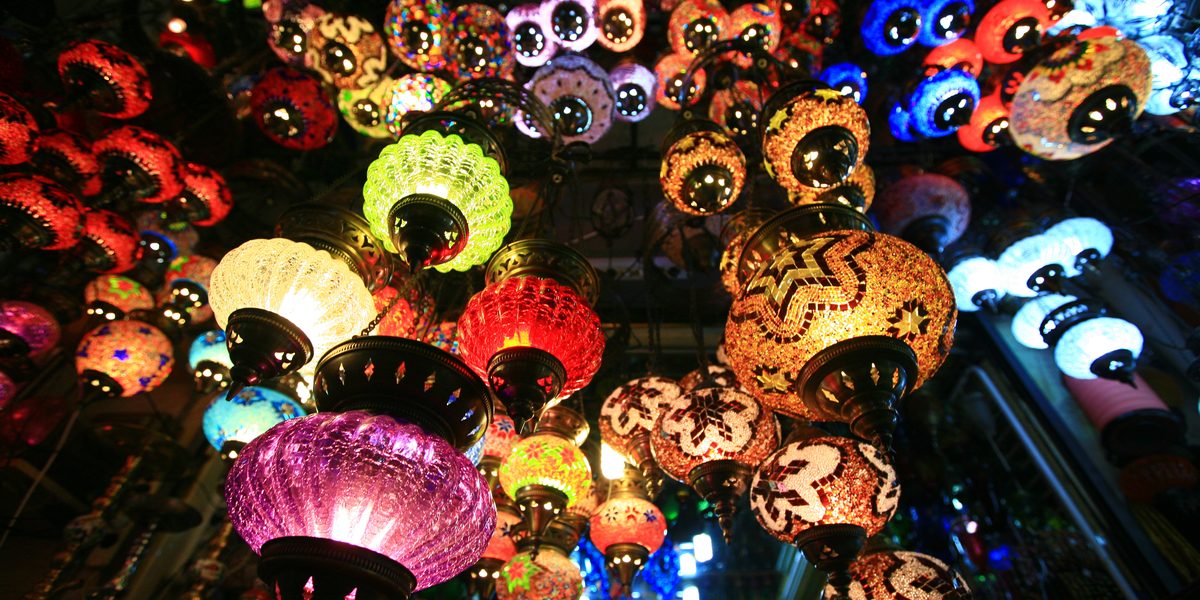
The Grand Bazaar is one of the oldest and largest covered markets in the world, a roofed labyrinth of thousands of shops arranged, as Ottoman markets always were, by trade: gold in one artery, carpets in another, leather, lamps, and ceramics in their own quarters. Nearby, the Spice Bazaar perfumes the air with saffron, sumac, dried fruit, and lokum. These are not museums of shopping; they are working marketplaces with their own etiquette. Bargaining is expected on carpets, jewelry, and antiques, and it is a social ritual rather than a battle. Accepting a shopkeeper's offered tea creates no obligation to buy; it is hospitality, and refusing brusquely is ruder than declining the carpet.
A few habits make bazaar days better. Counter the first price politely and expect to meet somewhere in the middle. Never begin serious negotiation on an item you have no intention of buying. Keep small banknotes handy, watch your bag in the crowds as you would in any busy market on earth, and give yourself permission to get lost, because the side halls and hidden courtyards where craftsmen still work are the best part.
Tea, Coffee, and the Meze Table
Tea is the metronome of Turkish life. Served strong in small tulip-shaped glasses with sugar cubes and no milk, it appears at every negotiation, ferry ride, and pause in conversation, and refusing a glass outright can feel like refusing friendship. Turkish coffee is the older ceremony: finely ground, brewed slowly in a small pot, served with the grounds settling in the cup, and traditionally followed by fortune-telling in the leftover sludge. Coffeehouse culture here is centuries deep, and it shaped how much of the world drinks coffee today.
Then there is the meze table, the great shared overture of a long dinner: small plates of smoky eggplant, stuffed vine leaves, white cheese, spicy tomato pastes, herbed yogurts, and seafood, passed around with warm bread and unhurried talk, often accompanied by the anise spirit rakı, which turns cloudy with water and is sipped slowly across an entire evening. Meze is not an appetizer course to rush through; it is the point. Add the street canon of simit bread rings, fish sandwiches by the water, roasted chestnuts, and baklava, and you understand why locals treat eating as the city's true civic activity.
The Hamam: Bathing as Heritage
The Turkish bath, or hamam, descends from Roman and Byzantine bathhouses and was perfected under the Ottomans, when the bath was a cornerstone of neighborhood life, hygiene, and celebration. The classic sequence is simple: you change into a checked cotton wrap called a peştemal, warm up on a heated marble platform beneath a domed ceiling pierced with star-shaped skylights, then receive a vigorous scrub with a rough mitt that removes skin you did not know you had, followed by a cloud of olive-oil soap foam, a rinse from marble basins, and tea in the cooling room. Bathing sections are separated by gender or scheduled at different hours, attendants are professionals, and modesty is maintained throughout. Go once for the architecture and you will return for the feeling: boiled, polished, and completely reset.
Neighborhood Rhythms and Everyday Manners
Beyond the monuments, Istanbul rewards attention to its daily choreography. The call to prayer sounds five times a day from thousands of minarets, overlapping across the water; it is not an alarm but a soundtrack, and pausing to listen is one of the city's free pleasures. Street cats are fed, sheltered, and adored by common consent, a civic tenderness visitors quickly adopt. Greetings matter, hospitality is a matter of personal honor, and a few words of Turkish, a hello, a thank you, a well-wish to a cook, earn disproportionate smiles. Dress in the historic quarters skews modest, queues can be interpretive, and bargaining belongs in bazaars, not in fixed-price shops or restaurants. Mostly, the manners of Istanbul reduce to reciprocated generosity: accept the tea, share the plate, and take your time.
Final Thoughts
Istanbul cannot be finished, only begun. It is a city where empires are stacked like sediment, where a ferry ticket buys passage between continents, and where etiquette in a mosque, a bazaar, and a bathhouse all teach the same lesson in different dialects: slow down and show respect, and the city opens. Learn the layers before you go, then let the streets rearrange them for you. Every traveler leaves with a different Istanbul, and all of them are true.