The travel-brochure Caribbean — a single turquoise backdrop with interchangeable islands — is a fiction that does the region a disservice. In reality, the Caribbean is one of the most culturally dense places on the planet: dozens of islands speaking four European languages and several creoles, each with its own history, cuisine, music, and sense of humor, all threaded together by a shared inheritance both painful and astonishingly creative. Travelers who treat the islands as identical resorts see almost nothing; travelers who learn even a little of the story behind the beaches find one of the world’s great cultural regions hiding in plain sight. Here is the background that changes what you see.
One Sea, Many Worlds
Start with the differences, because locals certainly do. Jamaica and Barbados are both English-speaking, yet their accents, food, and temperaments are as distinct as Ireland and England. The Spanish-speaking Greater Antilles — Cuba, the Dominican Republic, Puerto Rico — share deep musical kinship but fiercely separate identities. Martinique and Guadeloupe are legally part of France, with boulangeries and euros beneath the palms; Curaçao and Aruba speak Papiamento, a creole woven from Portuguese, Spanish, Dutch, and African languages; Haiti, the world’s first Black republic, has a history unlike anywhere on earth. Trinidad adds large Indian and Chinese communities to the mix, making Port of Spain one of the hemisphere’s most cosmopolitan small cities.
The practical lesson: never tell an islander that all the islands are the same, and never assume what was true on one island holds on the next. Island-hopping in the Caribbean is closer to crossing European borders than to visiting a chain of similar beaches — currencies, languages, driving sides, and social codes can all change in a twenty-minute flight.
The History Beneath the Postcard
Every island’s present is legible through its past. The first peoples — the Taíno in the Greater Antilles, the Kalinago in the eastern islands — left names still on every map: hurricane, canoe, barbecue, hammock, and Cuba, Haiti, and Jamaica are all indigenous words. Kalinago communities survive today, notably in a territory on Dominica, and Taíno ancestry and revival movements persist in the Spanish-speaking islands.
Then came the collision that made the modern Caribbean: European colonization and the transatlantic slave trade, which forcibly brought millions of Africans to work sugar plantations that generated staggering wealth for Europe. The islands changed imperial hands like poker chips — some, like St. Lucia, more than a dozen times — which is why forts crown so many harbors. After emancipation, indentured workers from India, China, and elsewhere reshaped islands like Trinidad and Guyana. This history is not an academic footnote; it is the direct source of the region’s languages, religions, festivals, and food. African heritage, in particular, is not one ingredient among many — it is the cultural bedrock: in rhythm, in spiritual traditions such as Haitian Vodou and Cuban Santería, in storytelling figures like Anansi the spider, and in the creole languages spoken at home even where a European language is official.
A Sound for Every Island
Nowhere on earth has produced more influential music per square mile. Each major genre is a small history lesson in itself.
- Reggae and its family (Jamaica): from mento and ska through rocksteady to reggae — slow, bass-heavy, and often spiritually and politically charged, deeply tied to Rastafari — and onward to dancehall, its faster, rawer descendant. Jamaican sound-system culture also seeded hip-hop and much of modern global pop.
- Calypso and soca (Trinidad and Tobago): calypso is witty, satirical storytelling with deep African roots — the newspaper of the people set to music — while soca is its high-energy carnival descendant, built for dancing in the road.
- Steelpan (Trinidad): the only major acoustic instrument invented in the twentieth century, hammered from oil drums in Port of Spain’s yards after earlier drums were banned — resistance turned into orchestras.
- Son, salsa, and rumba (Cuba): the fusion of Spanish guitar and African percussion that became the backbone of Latin music worldwide.
- Merengue and bachata (Dominican Republic): the former brisk and brassy, the latter romantic and guitar-led, both now global.
- Zouk (Martinique and Guadeloupe) and kompa (Haiti): the French-creole islands’ silky, interlocking dance styles.
Hearing music in its home context — a Kingston sound system, a Havana casa de la música, a panyard rehearsal in Port of Spain — is worth any number of resort cover bands. Ask locally where people actually go; the answer is rarely on the main tourist strip.
Eating Creole: The Shared Table
Caribbean food is the history made edible: African techniques and staples, indigenous ingredients, European preservation methods, and Indian and Chinese additions, remixed differently on every island. Jamaica’s jerk — meat rubbed with allspice and scotch bonnet, smoked over pimento wood — descends from Maroon communities who escaped slavery into the mountains. Trinidad’s beloved doubles and roti come from its Indian heritage. Cuba and Puerto Rico build meals on rice, beans, and slow-roasted pork; the French islands fold accras (salt-cod fritters) and colombo curry into a creole haute cuisine; Barbados pairs flying fish with cou-cou, a cousin of West African fufu.
Certain things unite the tables: rice and peas in a hundred variations, plantains at every stage of ripeness, salt cod (a plantation-era ration turned delicacy), root vegetables collectively called ground provisions, and hot pepper sauces treated as personal signatures. Rum is the region’s spirit in both senses, distilled from the sugar that drove its history, and each island will explain at length why its own is superior. Eat where the portions are big and the menus are short — cook shops, lunch counters, and Friday-night fish fries such as Barbados’ Oistins are where the real cuisine lives.
Carnival: The Region’s Beating Heart
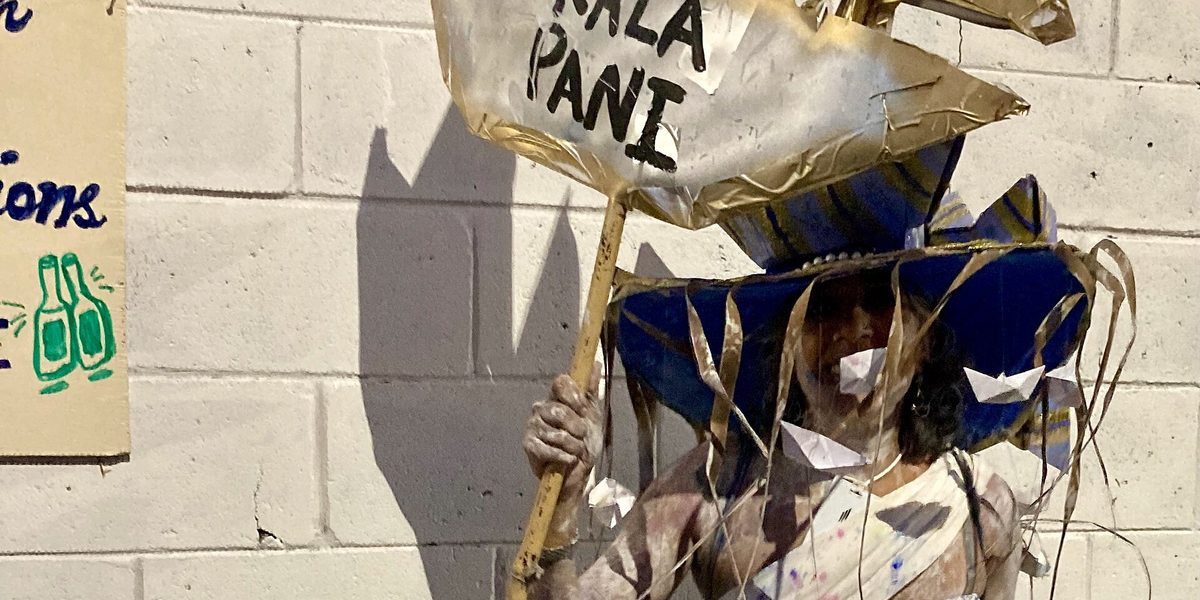
Carnival is the Caribbean’s great art form — part festival, part theater, part act of historical memory. Trinidad’s is the template: born when freed Africans took over the French planters’ masquerade season and filled it with their own music, satire, and characters. The traditional figures — blue devils, the stilt-walking Moko Jumbie inherited from West Africa, the aristocrat-mocking Dame Lorraine — carry codes of resistance and parody that predate the sequins.
Every island keeps its own version and calendar: pre-Lenten carnivals in Trinidad and the French islands, Crop Over in Barbados (rooted in the end of the sugar harvest), Junkanoo in the Bahamas around the turn of the year, and summer festivals elsewhere. Visitors are genuinely welcome, and joining a masquerade band is often open to anyone willing to register. The etiquette is simple: it is a participatory celebration, not a spectacle staged for tourists — dance, respect the traditions and the performers, ask before photographing people in costume up close, and understand that “playing mas” is, for many, an act of heritage as much as a party.
Etiquette the Islands Notice
Caribbean social codes are warmer and more formal than visitors expect, and the greeting is non-negotiable. Walking into a shop, boarding a minibus, or approaching anyone with a question begins with “good morning” or “good afternoon” — skipping it reads as genuine rudeness, and locals may pointedly greet you first as a correction. Elders are addressed with respect, politeness is noticed, and conversation before business is the norm rather than an inefficiency.
Dress codes matter more than the climate suggests: beachwear belongs on the beach, and walking through town in a swimsuit is disrespectful nearly everywhere; several islands also legally restrict civilians from wearing camouflage clothing. Ask permission before photographing people. Expect “island time” — a slower, more human pace — and treat it as a feature rather than poor service; impatience achieves nothing except marking you as someone who has not yet arrived. Finally, learn a little of each island’s specific story before you land. Nothing opens conversation faster than a visitor who knows the difference between soca and reggae, or who can name the island’s own hero, dish, or festival.
Final Thoughts
The beaches are real and they are glorious — but they are the lobby, not the house. The Caribbean’s deeper offer is a set of small nations that took the hardest of histories and turned it into languages, rhythms, cuisines, and celebrations the whole world now borrows from. Give each island the courtesy of its own identity, say good morning like you mean it, follow the music away from the resort strip, and eat where the line is long. Do that, and the region stops being a backdrop and becomes what it has always actually been: one of the richest cultural crossroads on earth, generous to anyone who shows up paying attention.