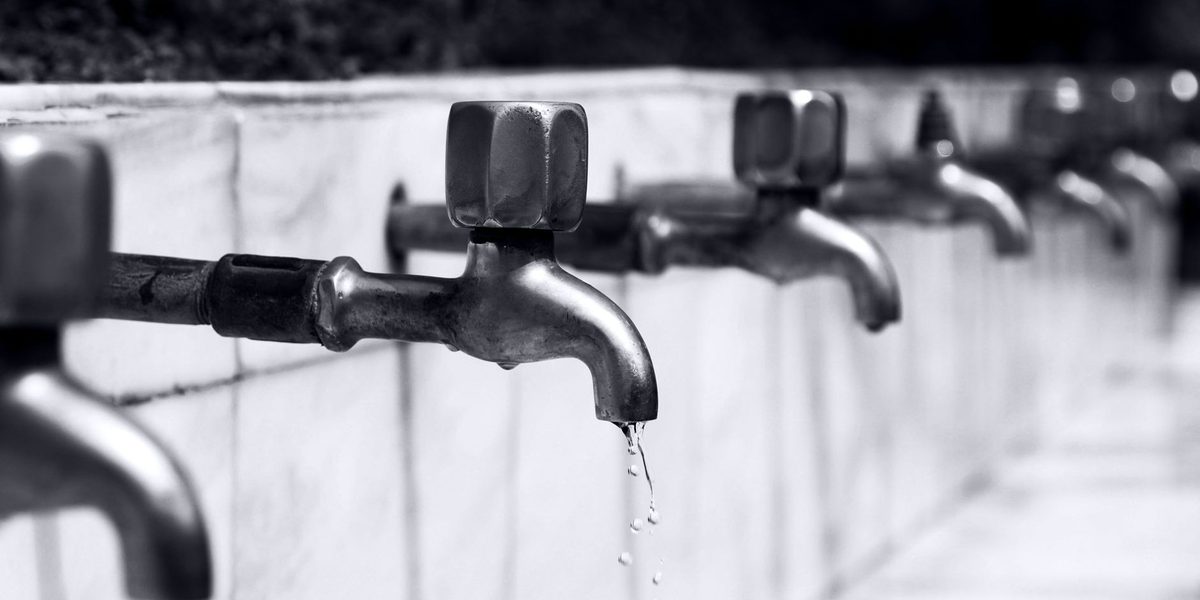
Hard water sounds like a contradiction, water is the softest thing in the house, until you meet its fingerprints: the white crust on the showerhead, the film on the glasses, the kettle that hisses like it is full of gravel. Hardness is one of the most common water conditions in homes, it is invisible in the glass, and it quietly shapes the lifespan of nearly every machine and pipe that water touches. Understanding what hard water actually is, and what it does mechanically and chemically, explains a dozen small household annoyances and one or two expensive ones.
What Hard Water Actually Is
Hardness is simply dissolved minerals, overwhelmingly calcium and magnesium, riding invisibly in the water. The water picked them up before it ever reached your home: rain falls soft, essentially mineral-free, then percolates through soil and rock. Where the local geology is limestone, chalk, or gypsum, the slightly acidic rainwater slowly dissolves those minerals and carries them along. Groundwater from wells in such regions tends to be hardest, having spent the longest time in contact with rock, while surface water from lakes and rivers is usually softer.
This is why hardness is a neighborhood trait rather than a plumbing choice: two towns an hour apart can have utterly different water because they sit on different rock. Hardness is measured in grains per gallon or milligrams per liter, and utilities publish it in their water quality reports, but most people learn their number the informal way, from what their kettle and shower glass look like after a year.
Scale: How Dissolved Minerals Become Rock
Dissolved minerals are harmless right up until they come out of solution, and the main thing that pushes them out is heat. Warm water holds these minerals less readily than cold, so wherever hard water is heated, the calcium and magnesium precipitate out as a chalky solid called limescale. It forms exactly where the heat is: on heating elements, inside kettles, on the bottom of water heater tanks, and in the narrow hot passages of appliances.
Scale is the mineral putting itself back into rock form, inside your equipment. It builds in thin, hard layers, and it is a stubborn insulator, which is the detail that makes it expensive. A heating element blanketed in scale must run hotter and longer to push the same heat into the water, wasting energy and cooking itself in the process. In a tank water heater, a sediment layer of scale between the burner and the water does the same, and the popping, rumbling sound of an aging tank is often steam bubbles snapping through that mineral blanket. Tankless heaters, with their narrow heat-exchanger passages, feel the effect even sooner, which is why descaling is part of their routine care.
What Hardness Does Around the House
Beyond the heater, hard water leaves a trail of signatures that most people never connect to a single cause:
- Crusty faucets and showerheads, as tiny amounts of water evaporate at the openings and leave their minerals behind, gradually narrowing the spray.
- Spots on glasses and silverware, which are mineral residue left where droplets dried.
- Stiff, dingy laundry, because minerals bind with detergent and lodge in fabric fibers.
- Shortened appliance lives, as dishwashers, washing machines, coffee makers, and humidifiers accumulate scale in their valves, jets, and heating parts.
- Reduced hot-water flow over years, as scale gradually narrows hot supply lines, the plumbing equivalent of hardening arteries.
None of these is dramatic on any given day, which is precisely the character of hard water: it is not a failure, it is a tax, collected in small increments from every water-using machine in the house.
Soap Scum: The Chemistry of the Ring Around the Tub
Hard water's most visible daily trick is what it does to soap. Traditional soap molecules are designed to grab oils and rinse away, but they would rather react with calcium and magnesium, and in hard water they get the chance. The reaction produces a sticky, insoluble residue, soap scum, which is why hard-water homes fight a ring around the tub, film on shower doors, and shampoo that refuses to lather.
The same chemistry explains two everyday observations. First, hard-water households use more soap and detergent for the same result, because a portion of every dose is sacrificed to the minerals before any cleaning begins. Second, skin and hair often feel different, squeaky but dry, since a fine layer of soap-mineral residue stays behind after rinsing. Modern synthetic detergents dodge the reaction better than old-fashioned soap, which is why dish liquid lathers where bar soap fails, but the underlying tug-of-war continues in every wash.
Softeners: Trading One Mineral for Another
A water softener does not filter minerals out in the ordinary sense; it swaps them. Inside the tank sit thousands of tiny resin beads charged with sodium ions. As hard water flows through, the resin holds calcium and magnesium more tightly than sodium, so the beads grab the hardness minerals and release sodium in exchange. The water leaves softened, its scale-forming minerals replaced by ones that stay dissolved and do not build rock in your pipes.
The beads eventually fill up with hardness minerals, which is where the salt comes in. Periodically the softener flushes itself with a strong brine solution from the salt tank, and the sheer concentration of sodium crowds the calcium and magnesium off the resin and washes them down the drain. That cycle, called regeneration, usually runs overnight, and it is why softeners eat bags of salt: the salt is not softening your water directly, it is rinsing the filter's memory clean. Households watching sodium intake, or wanting to understand the trade-offs for gardens and septic systems, have a good practical question for a water professional, and salt-free conditioners that alter scale behavior rather than removing hardness are a different technology worth understanding before comparing.
Reading Your Own Water
You can diagnose hardness informally with observations you already have: how fast the kettle crusts, whether soap lathers easily, how quickly showerheads clog, whether glasses spot straight out of the dishwasher. A quick experiment, shaking a little soap in a closed jar of water, tells the story too: soft water froths instantly, hard water yields a weak lather and cloudy liquid. Inexpensive test strips put a number on it, and utility reports give the official figure. Well owners have extra reason to test periodically, since their hardness comes straight from the local rock with no utility in between, and it can shift as the aquifer and seasons change.
The number matters mostly at the extremes. Mildly hard water is a cosmetic nuisance and a slow tax; very hard water meaningfully shortens equipment life and justifies treatment on economics alone. Between those poles it is a judgment call about how much crust-scrubbing and appliance wear a household is willing to trade against the cost and upkeep of a softener.
Final Thoughts
Hard water is geology paying your house a visit: rock dissolved by rain, carried through the mains, and re-deposited wherever your home applies heat or lets a droplet dry. Once you see it that way, the crusty showerhead, the rumbling water heater, the spotted glasses, and the stubborn tub ring stop being separate mysteries and become one process, observable and manageable. Whether you soften, descale, or simply live with it, knowing what the water is carrying, and where it tends to leave its luggage, puts you, rather than the local geology, back in charge of the arrangement.