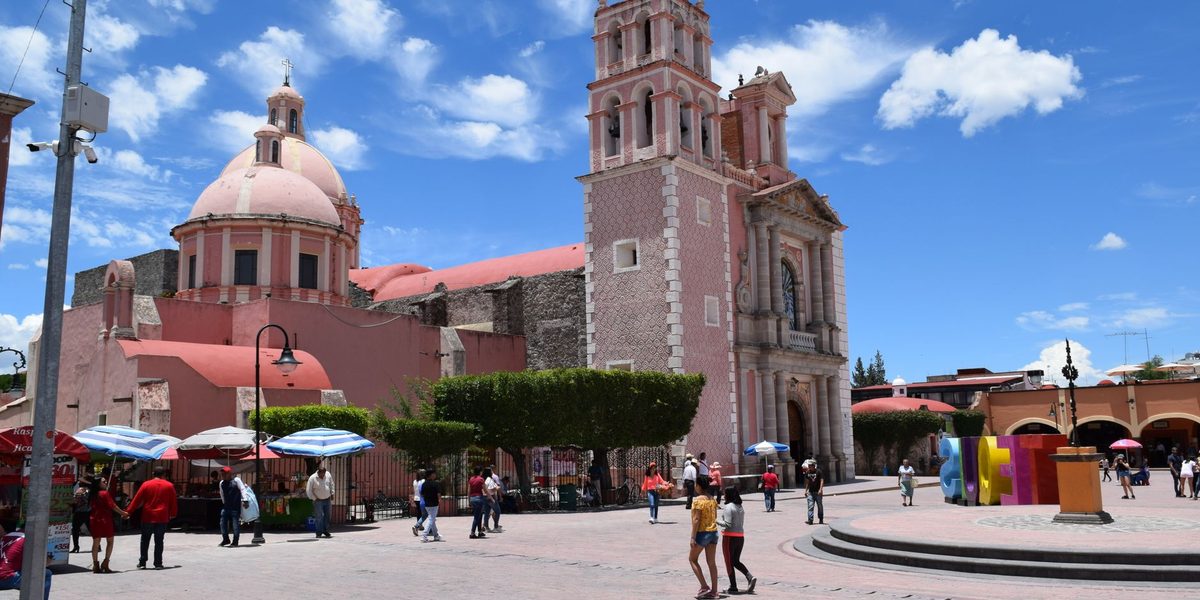
Big-city Mexico gets the headlines, but the country's soul lives at a smaller scale: in towns where a shaded plaza anchors everything, church bells mark the hours, and the week revolves around market day. These pueblos share a recognizable architecture of daily life, a square, a church, a covered market, a bandstand, yet each one guards its own saint, its own dish, its own craft, and its own calendar of celebrations. For travelers, small-town Mexico is not a lesser version of the famous destinations; it is the original pattern from which they grew. Understanding how these towns are organized, socially as much as physically, turns a quick stop into one of the most rewarding kinds of travel the country offers.
The Plaza: A Town's Living Room
Nearly every Mexican town is built around a central square, called the plaza principal or zócalo, a legacy of colonial town planning that placed church, government, and commerce around one open space. Centuries later, the plaza still functions exactly as designed: it is the town's living room, stage, playground, and news service. On one side rises the parish church; on another, the municipal palace with its arcades; around the edges, cafés, ice-cream sellers, and shoeshine stands; and in the middle, almost always, a wrought-iron bandstand called a kiosco, ringed by laurels and benches.
The plaza has rhythms worth learning. Mornings belong to sweepers, schoolchildren, and old men with newspapers. The heat of midday empties it. Then, as evening cools, the whole town returns for the paseo, the unhurried social stroll, families circling, teenagers flirting, vendors selling roasted corn and balloons, sometimes a band playing from the kiosco. Visitors are welcome in all of it. Buy something small, take a bench, and watch; there is no better free introduction to how a town actually works.
Mercados: Market Day and the Art of the Stall
The covered municipal market, the mercado, is the plaza's hardworking sibling. Inside, stalls are grouped by trade: pyramids of chiles and tomatoes, butchers and cheese counters, flowers, herbs and folk remedies, piñatas, and a row of fondas, tiny kitchens where market workers eat the best cheap food in town. Many regions also keep the far older tradition of the tianguis, the open-air street market that arrives on a fixed day of the week and transforms the town, a practice with roots reaching back long before the Spanish arrived. Ask any local which day is market day; planning your visit around it is the single best trick in small-town travel.
Market manners are simple and repay themselves instantly. Greet the vendor before asking prices, because in Mexico a transaction is a conversation with a purchase attached. Gentle bargaining may be acceptable at craft stalls, but haggling aggressively over food is poor form; the difference of a few coins matters more to the seller than to you. Handle produce only when invited, carry small bills, and accept offered tastes with thanks. If a stallholder tells you their competitor has what you need, believe them; that courtesy is the system working.
Crafts and the Pride of Place
Small-town Mexico is a republic of specialists. One town is known for black clay pottery, another for hand-carved and painted wooden creatures, others for silverwork, glazed talavera ceramics, lacquered trays, hammocks, saddles, guitars, or wool rugs dyed with cochineal and indigo. These specialties are not marketing inventions; they are inherited trades, often pre-Hispanic in origin, passed through families and taught in home workshops that double as storefronts. The name of a craft town functions like an appellation: people travel specifically to buy at the source.
Buying well is part of the experience. Seek out family workshops where you can watch the loom, the wheel, or the kiln at work, and expect prices to reflect days or weeks of labor rather than factory economics. Asking how something is made is not an imposition; it is the highest compliment available, and artisans are usually proud to demonstrate. A purchase made this way carries a story home with it, and your money lands exactly where the skill lives.
The Fiesta Calendar: How Towns Keep Time
Every town has a patron saint, and the saint's feast is the emotional summit of the local calendar, a fiesta patronal that can run for days. The pattern repeats across the country with local variations: processions carrying the saint's image through decorated streets, dawn serenades and fireworks, brass bands, traditional dances in costume, rodeo events, amusement rides in the plaza, and towering firework frames called castillos that spin and blaze after dark. Beyond the patron saint, the shared national cycle adds its own peaks: Carnival's costumed exuberance, the solemn processions of Holy Week, the September nights of patriotic celebration, the marigold altars and candlelit cemeteries of the Day of the Dead, and the December posadas that reenact the search for shelter with songs, piñatas, and hot fruit punch.
Fiestas are communal, not commercial, and outsiders who behave like guests rather than spectators are folded in with astonishing generosity. Stand respectfully during processions, ask before photographing dancers or altars, accept the tamale you are handed, and understand that the noise, the pre-dawn rockets especially, is not for tourists at all. It is the town talking to itself, and to its saint.
Courtesy: The Grammar of Getting Along
Formal courtesy is the operating system of small-town Mexico, and travelers who learn a handful of phrases are treated less like tourists and more like guests. Greetings are not optional: entering a shop, joining a bus bench, or passing someone on a quiet street calls for a buenos días, buenas tardes, or buenas noches depending on the hour. A few essentials carry you far:
- Buenos días / buenas tardes — the all-purpose greeting that opens every interaction politely.
- Por favor and gracias — please and thank you, used far more often than in English.
- Provecho — said to people who are eating, even strangers in a fonda; it means enjoy your meal and marks you as well-raised.
- Con permiso — excuse me when passing through or taking your leave.
- Disculpe — excuse me to get attention or apologize; mande is the polite way locals say pardon?
Beyond vocabulary, the courtesies are behavioral: shake hands or exchange a light cheek kiss when introduced, use the formal usted with elders, never rush a conversation to its transaction, and accept hospitality graciously, because refusing outright can wound. Patience itself is a courtesy here; schedules bend, and the visitor who bends with them has already half-learned the culture.
Food Traditions: The Town on a Plate
Small-town food is regional identity made edible. The tortilla is its foundation, and in many pueblos you can still follow the smell of toasting corn to a tortillería or to a kitchen where masa is pressed by hand and cooked on a clay comal. Each region tells you where you are through its dishes: complex moles in the south, slow-roasted barbacoa and pit-cooked meats in the center, cochinita pibil in the Yucatán, birria in the west, seafood along the coasts, and everywhere an arsenal of salsas whose heat is a point of local pride. Sunday afternoons pull families to long shared meals; market fondas serve a set midday comida of soup, rice, a main dish, and agua fresca; street stands take over the plaza at night.
Eat where the crowds are, since turnover is the best hygiene certificate; try the town specialty even if you cannot pronounce it yet; and say provecho to your neighbors when you sit down. Sweets deserve a detour too: every region keeps its own candies, breads, and festival treats, and bakeries sell them with tongs and a tray, self-service style. Food here is not fuel between sights. It is the sight.
Final Thoughts
Markets, plazas, and fiestas are not three separate attractions; they are one system, the physical, commercial, and spiritual architecture of belonging that Mexican small towns have refined over centuries. Visit with unhurried feet and a pocketful of greetings, plan around market day, sit in the plaza at dusk, and say yes to whatever the fiesta hands you. The famous ruins and beaches will still be there afterward. The pueblo, meanwhile, will have taught you how Mexico actually lives.