Every cheese in the world — the crumbly, the gooey, the pungent, the squeaky — starts as the same thing: milk. That is a remarkable fact when you stand in front of a well-stocked cheese counter. How does one liquid become both a delicate fresh mozzarella and a rock-hard, crystal-studded aged wheel? The answer is a chain of small decisions made by the cheesemaker, each one steering the milk down a different path. Once you understand the handful of steps every cheese shares, the entire counter stops being a wall of mysterious names and becomes a map you can actually read.
Curds and Whey: The First Split
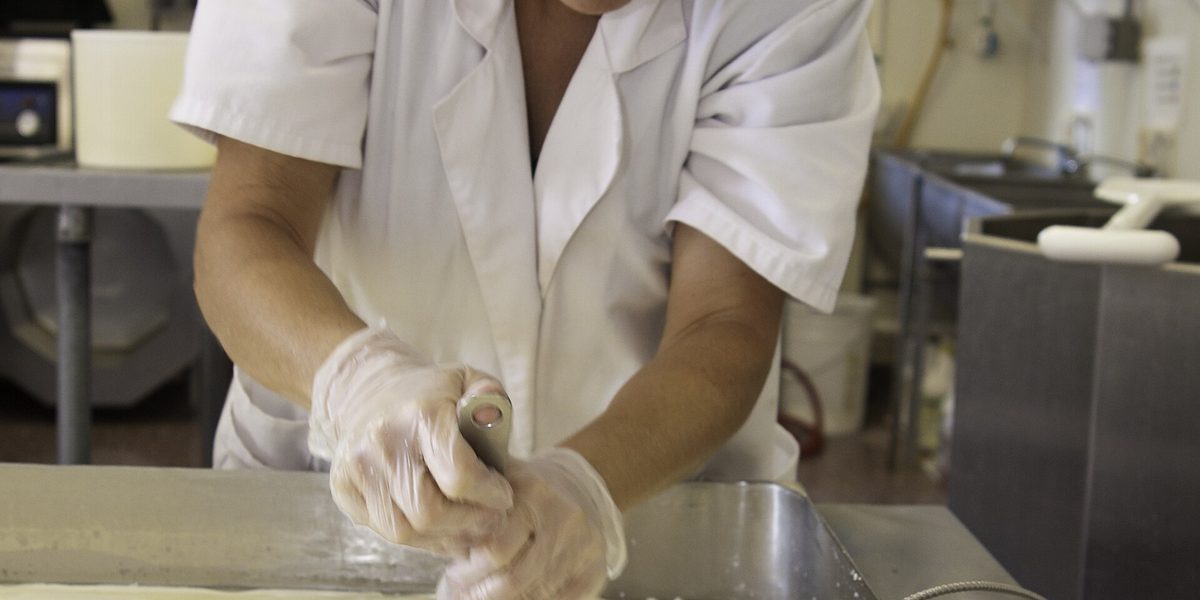
Milk is mostly water carrying three important passengers: proteins, fat, and a sugar called lactose. The key protein family, the caseins, floats through milk as microscopic bundles that repel each other, which is why milk stays a smooth liquid. Cheesemaking begins by making those bundles stop repelling and start sticking together. When they do, they link into a mesh that traps the fat and much of the water, forming a soft gel. Cut or stir that gel and it separates into solid curds and a thin, cloudy liquid called whey.
Nearly everything after this point is about how much whey you remove and what you allow to happen to the curds. Leave lots of moisture in and you get a soft, mild, short-lived cheese. Press the whey out, salt the curds, and give them time, and you are on the road to something firm, complex, and long-keeping. Moisture is the master dial of cheesemaking.
Two Ways to Coagulate: Acid and Rennet
There are two main ways to make casein proteins stick together. The first is acid. As friendly bacteria eat lactose, they produce lactic acid, and enough acid makes the proteins clump. Acid-set cheeses — think of soft fresh styles like ricotta-type and farmer-style cheeses — tend to be delicate, spoonable, and slightly tangy, because the acid produces a fragile curd that never knits tightly.
The second way is rennet, a set of enzymes traditionally taken from a calf’s stomach and now often produced by microbes or plants. Rennet works like precision scissors: it snips off the hairy outer layer that keeps casein bundles apart, and the bundles then lock together into a strong, elastic gel while the milk is still barely acidic. That sturdy curd can be cut, cooked, stretched, and pressed, which is why almost every firm, sliceable, or meltable cheese — cheddar styles, alpine styles, gouda styles, mozzarella — is a rennet cheese. Most cheeses actually use both: bacteria for acidity and flavor, rennet for structure.
Fresh Cheese Versus Aged Cheese
A fresh cheese is essentially finished the day it is made: drain the curds, maybe salt them, and eat within days or weeks. Its flavor is the flavor of milk itself — lactic, gentle, clean — and its high moisture means it spoils quickly. Aged cheese takes the opposite bet. By salting, pressing, and drying the curd, the cheesemaker makes it inhospitable to spoilage while leaving it hospitable to a slow crew of desirable bacteria, molds, and enzymes. Then the cheese rests, sometimes for months or years, while that crew quietly takes the milk apart.
Aging, or affinage, is controlled decomposition in the most flattering sense. Enzymes break the bland casein mesh into smaller fragments, many of which taste savory, brothy, or nutty; fats break into fruity and sharp aromatic compounds; residual sugars disappear entirely, which is why long-aged cheeses contain little to no lactose. In very old cheeses, protein fragments even crystallize into the pleasant crunchy specks you feel in a mature wheel. Time does not just intensify a cheese’s flavor — it invents flavors that were never in the milk.
How the Texture Families Form
Most cheeses you will ever meet belong to a few families, and each family is defined by a technique, not a region or a name.
- Soft-ripened (bloomy rind): a young, moist cheese is coated with a white surface mold that digests the paste from the outside in, creating that gooey layer under the rind. Brie-style and camembert-style cheeses ripen this way, growing softer and stronger with age.
- Washed rind: the surface is regularly wiped with brine, which favors orange-pink bacteria that produce famously pungent, meaty aromas. These cheeses often smell far bolder than they taste.
- Blue: a blue-green mold is added to the milk or curds, then the wheel is pierced with needles so air reaches the interior and the mold can grow in veins, adding peppery, sharp flavor throughout.
- Hard aged: curds are cut small, cooked, and pressed hard to expel moisture, then aged long. Low moisture plus salt lets these wheels develop deep, nutty, crystalline character over months or years.
- Pasta filata (stretched curd): curds are heated and kneaded like taffy, aligning the proteins into stretchy layers — the mozzarella family’s signature.
Cow, Goat, and Sheep: Why the Milk Matters
The animal behind the milk sets the cheese’s baseline personality. Cow’s milk is the mildest canvas — buttery, sweet, and rich, with large-volume production that suits big aged wheels. Goat’s milk carries distinctive fatty acids that give the familiar bright, tangy, faintly barnyard note people call goaty, and its softer curd structure suits fresh and small ripened cheeses; it is also naturally whiter, because goats convert the pigments in grass more completely than cows do. Sheep’s milk is the richest of the three, with far more fat and protein per cup, so sheep cheeses tend to be dense, buttery, and subtly sweet with a gamey depth — a lot of cheese from not much milk, which is why they are often firm and aged.
Diet and season matter too. Milk from animals grazing on fresh pasture carries different aromas and a deeper color than milk from winter hay, which is part of why traditional cheeses vary through the year.
Why Some Cheeses Melt Beautifully and Others Refuse
Melting is a structural event. In a good melter, warmth loosens the casein mesh so it flows, while the trapped fat lubricates the slide — that is the smooth pull of a young gouda or a mozzarella. Three things decide whether it happens. Moisture: young, moist cheeses flow easily, while very dry aged cheeses soften but never really pour. Acidity: cheese has a melting sweet spot, and cheeses made with lots of acid — fresh goat cheese, halloumi-style squeaking cheeses, paneer — have protein networks so tightly fused or so fragmented that heat cannot loosen them, which is why they brown and hold their shape in a hot pan instead of melting.
Age is the third factor, and it explains greasy pizza mishaps: in long-aged cheese the proteins are too broken down to form a stretchy net, so the fat leaks out and pools. This is also why sharp aged cheeses make grainy, broken sauces on their own — their proteins clump instead of flowing. The classic fixes are to blend an aged cheese with a young melter, or to add a starchy or acidic liquid that keeps the proteins apart while they melt.
Reading a Cheese Counter Like a Map
Put the pieces together and any unfamiliar cheese becomes legible. Look at the rind: powdery white suggests bloomy and creamy; sticky orange suggests washed and pungent; a hard natural rind suggests age and concentration. Look at the paste: moist and bright means young and mild; deep gold, dry, and crystalline means long-aged and intense. Ask what animal gave the milk and you can predict the baseline flavor before a single taste. The vocabulary of cheese — coagulation, moisture, mold, time — is short, and every style is just a different sentence built from it.
Final Thoughts
Cheese is milk plus decisions: how to set it, how much water to remove, which microbes to invite, and how long to wait. Acid or rennet decides the curd’s strength; moisture decides its lifespan; molds, bacteria, and time decide its personality; and the structure that results decides whether it melts into silk or stands proudly in the pan. None of it is magic, but all of it is craft — and knowing the map makes every wedge, from the humblest fresh curd to the oldest wheel, taste like a story you can follow.