Mexican food is one of the most beloved cuisines on the planet, and also one of the most misunderstood. Many people know it mainly through a narrow menu of crispy shells and melted cheese, when the real thing is a vast, ancient, regionally diverse tradition — recognized as a cultural treasure — built on a handful of brilliant foundations. The good news is that those foundations are learnable. Understand what corn becomes through nixtamalization, what chiles actually contribute beyond heat, and how sauces are layered rather than dumped, and the entire cuisine opens up. This is a walk through the building blocks, the way a friendly syllabus would lay them out.
Corn: The Foundation of Everything
Corn is not merely an ingredient in Mexican cooking; it is the cuisine’s center of gravity. Domesticated in Mesoamerica thousands of years ago from a wild grass, corn was bred patiently into the generous plant we know, and the cultures that shaped it built their calendars, myths, and meals around it. That heritage survives in the sheer range of native corn still grown — white, yellow, blue, red, and deep purple varieties, each with its own flavor and best use.
But raw corn has limits. Its most important nutrients are locked away, its tough hull resists grinding, and dried corn flour on its own makes crumbly, lifeless dough. The genius that unlocked corn — and arguably made the great corn-based civilizations possible — was a bit of kitchen chemistry discovered long before anyone could explain it.
Nixtamalization: The Ancient Chemistry That Changed Corn
Nixtamalization is the process of simmering and soaking dried corn in an alkaline solution — traditionally water with calcium hydroxide, known as cal or slaked lime (the mineral, not the citrus). The alkaline bath loosens the tough outer hull so it rubs away, and it transforms the kernel inside. Nutritionally, it frees niacin, a B vitamin otherwise locked in the corn, and boosts absorbable calcium — which is why cultures that nixtamalized corn thrived on it while others who adopted corn without the technique suffered deficiency diseases.
Culinarily, the transformation is just as dramatic. Alkaline cooking partially gelatinizes starches at the kernel’s surface and alters its proteins, so that when the corn is ground, it becomes a cohesive, pliable dough instead of gritty meal. It also creates that unmistakable aroma — deep, toasty, faintly floral — that separates a real corn tortilla from a merely corn-flavored one. Nixtamalization is why tortillas, tamales, and countless antojitos exist at all.
Masa: The Dough That Becomes a Thousand Things
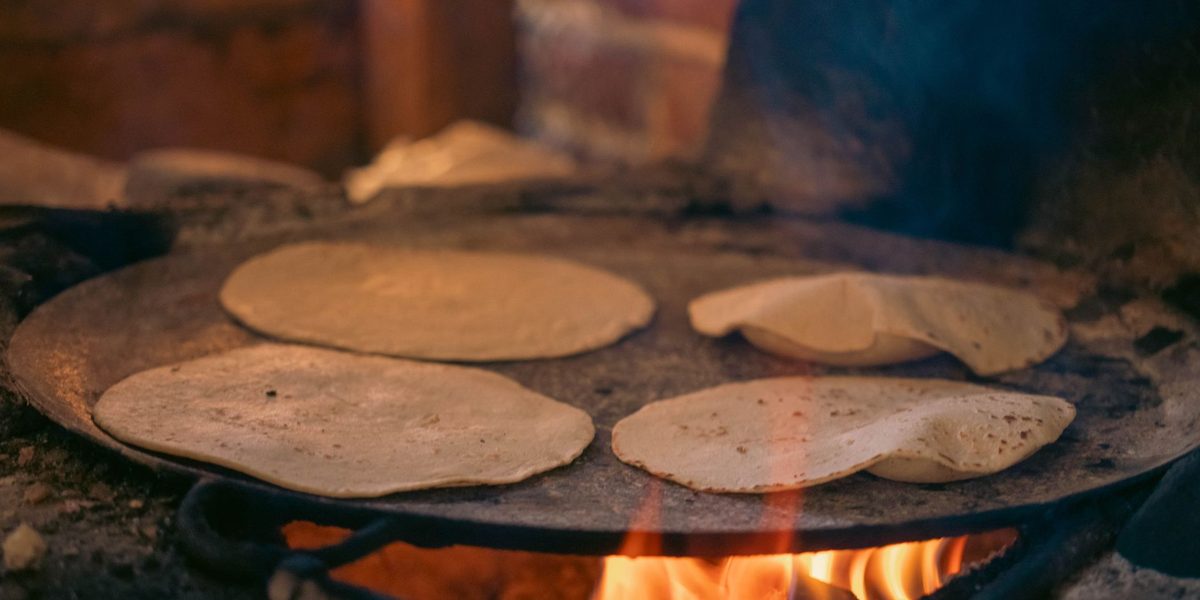
Grind nixtamalized corn while it is still moist and you get masa — a soft, fragrant dough that is one of the world’s great staple preparations. Pressed thin and cooked on a hot comal, masa becomes tortillas, which puff proudly when everything goes right. Beyond the tortilla, the same dough becomes tamales steamed in husks or banana leaves, thick oval memelas and huaraches, boat-shaped sopes, stuffed quesadillas, gorditas, and dumplings for soups. Masa even thickens drinks and stews: whisked into water it becomes the hot, comforting beverage family of atole, and stirred into simmering pots it gives body the way roux does elsewhere.
Fresh masa, ground the same day, is the gold standard, with a tender texture and full aroma. Masa harina — nixtamalized corn dough that has been dried and powdered — is the practical pantry version: mixed with warm water, it rehydrates into a very respectable dough, and it is the honest gateway for home cooks anywhere to make real tortillas. Either way, a warm tortilla made minutes before eating is a different food from anything sold in a bag, and it explains why the tortilla is treated with such respect at the table.
Chiles: Flavor First, Heat Second
The most common misunderstanding about Mexican food is that chiles exist to make it hot. In truth, chiles are the cuisine’s spice rack, its fruit bowl, and its backbone of flavor — heat is just one note among many. The same plant delivers wildly different personalities fresh and dried, and cooks choose chiles the way others choose wine grapes.
- Fresh chiles bring brightness and vegetal snap: grassy green ones for salsas and garnish, hotter small ones for punch, and large mild ones grown for stuffing and roasting, prized for flavor rather than fire.
- Dried chiles are fresh chiles transformed, the way raisins transform grapes. Drying concentrates sugars and creates entirely new flavors: some turn raisiny and chocolatey, some bright and tangy like dried cherries, some smoky — including the famous case of a fresh green chile that becomes something else entirely once smoke-dried.
- Preparation multiplies them further: toasting dried chiles on a hot surface wakes their oils, soaking softens them for blending, and charring fresh ones adds sweetness and smoke.
A single sauce may combine three or four dried chiles precisely because each contributes a different register — one for body and sweetness, one for acidity, one for smoke, one for heat. Reading a chile’s role, not just its temperature, is the key skill.
Salsas and Moles: Sauces Built in Layers
Mexican cooking is, at its heart, a cuisine of sauces, and they are constructed rather than assembled. Even a simple table salsa involves decisions at every step: raw ingredients give sharp freshness, boiled ones give mellow smoothness, and charred or roasted ones — tomatoes and tomatillos blistered on a comal, garlic toasted in its skin — give sweetness and smoky depth. The grinding method matters too; a stone mortar crushes cell walls and releases oils differently than a blender slices them, which is why molcajete salsas taste rounder.
Moles are this layering philosophy taken to its summit. A mole is not one flavor but dozens reconciled: multiple toasted chiles, nuts and seeds for body, spices, dried fruit, charred aromatics, sometimes a touch of chocolate — each ingredient often toasted or fried separately before everything is ground, combined, and patiently fried and simmered until the flavors fuse into something no single component predicts. Some are dark and profound, others green and herbal, others brick-red and nutty. The lesson moles teach applies everywhere in the cuisine: flavor is built in stages, each transformation adding a floor to the building.
Beans, Rice, and the Rhythm of the Table
Alongside corn and chiles stands the third ancient staple: beans. Black beans in the south, pintos and bayos northward, simmered slowly with aromatics until creamy, eaten brothy from the pot one day and mashed and refried in a bit of fat the next. Beans and corn are old agricultural partners — grown together in traditional plantings and eaten together for good reason, since their proteins complement each other. Rice, a later arrival, earned its permanent seat as sopa seca, the dry soup: toasted in fat, then simmered with tomato or herbs until every grain stands apart. Together they form the quiet rhythm section under the cuisine’s flashier melodies.
A Cuisine of Regions, Not a Single Menu
There is no one Mexican cuisine; there are many, shaped by geography and history. Coastal regions lean into seafood, citrus, and achiote; the arid north into wheat-flour tortillas, beef, and grilling; the central valleys into the antojito universe of masa snacks; the south into complex moles, herbs, and traditions with deep indigenous roots. Ingredients shift, techniques persist — the comal, the toasting, the grinding, the layering. Approaching the cuisine with curiosity about where a dish comes from is both more respectful and more delicious than treating it as a single flavor.
Final Thoughts
Corn transformed by alkaline chemistry, chiles chosen for flavor rather than fear, sauces built layer by patient layer, beans and rice holding down the foundation — these are the building blocks, and none of them is a shortcut. Mexican cuisine rewards the cook who toasts the chile before soaking it and warms the tortilla before serving it, because the techniques are the tradition. Start with good masa and one dried chile you have never met, and you are already learning the language.