Few kitchen experiences are as universal as standing over a cutting board, eyes streaming, wondering why a vegetable is making you weep. The answer is genuinely fascinating: onions are running a chemical defense system, and your knife just triggered it. Garlic runs a nearly identical system, which is why the way you cut a clove — crushed, sliced, or left whole — changes its flavor so dramatically. Understanding the chemistry of these two alliums explains the tears, the transformation from harsh to sweet, and the reason garlic goes from golden to bitter in seconds. It will also quietly make you a better cook.
A Defense System Waiting to Fire
Onions, garlic, leeks, shallots, and chives all belong to the allium family, and they share a survival strategy. As they grow, they absorb sulfur from the soil and store it in stable, odorless compounds inside their cells. In a separate compartment of each cell, they store an enzyme. As long as the plant is intact, the two never meet, and a whole onion or garlic bulb has almost no aroma at all — sniff an uncut onion and you will notice how little you smell.
The moment a knife, a grater, or a bite ruptures those cells, the barriers break and the enzyme meets the sulfur compounds. In a flash, they react to produce a burst of new, intensely aromatic molecules. From the plant's perspective, this is a chemical alarm meant to deter whatever creature is chewing on it. From a cook's perspective, it means something crucial: the flavor of an allium is not sitting in the vegetable waiting to be released — it is manufactured on the spot, by damage, in the seconds after you cut. More damage means more reaction, which means more pungency. That single idea explains almost everything that follows.
Why Onions Specifically Make You Cry
Onions carry the chemistry one step further than garlic. Among the molecules produced when their cells break, onions make a special one: a volatile compound whose entire job is to irritate. Being volatile, it evaporates off the cutting board, drifts upward, and dissolves into the moist film covering your eyes, where it forms mild sulfur-containing acids. Your eyes interpret this as a chemical attack — which, in fairness, it is — and respond the only way they can: flushing with tears to dilute and wash the irritant away.
This also explains the familiar patterns of onion crying. The tears get worse the longer you chop, because you keep breaking fresh cells and generating more of the compound. The root end is the worst offender, since the defensive machinery is most concentrated there. A dull knife makes everything worse because it crushes cells instead of slicing cleanly through them, rupturing far more than necessary. And older, more pungent storage onions typically produce more tears than mild, sweet varieties, which contain less of the sulfur ammunition to begin with.
How to Cry Less
Once you know the mechanism — a volatile compound produced by cell damage, traveling through the air to your eyes — the folk remedies sort themselves into ones that address the actual problem and ones that are pure superstition.
- Chill the onion first. Cold slows both the enzyme reaction and evaporation, so far less of the irritant becomes airborne. Fifteen minutes in the freezer or a stint in the fridge makes a real difference.
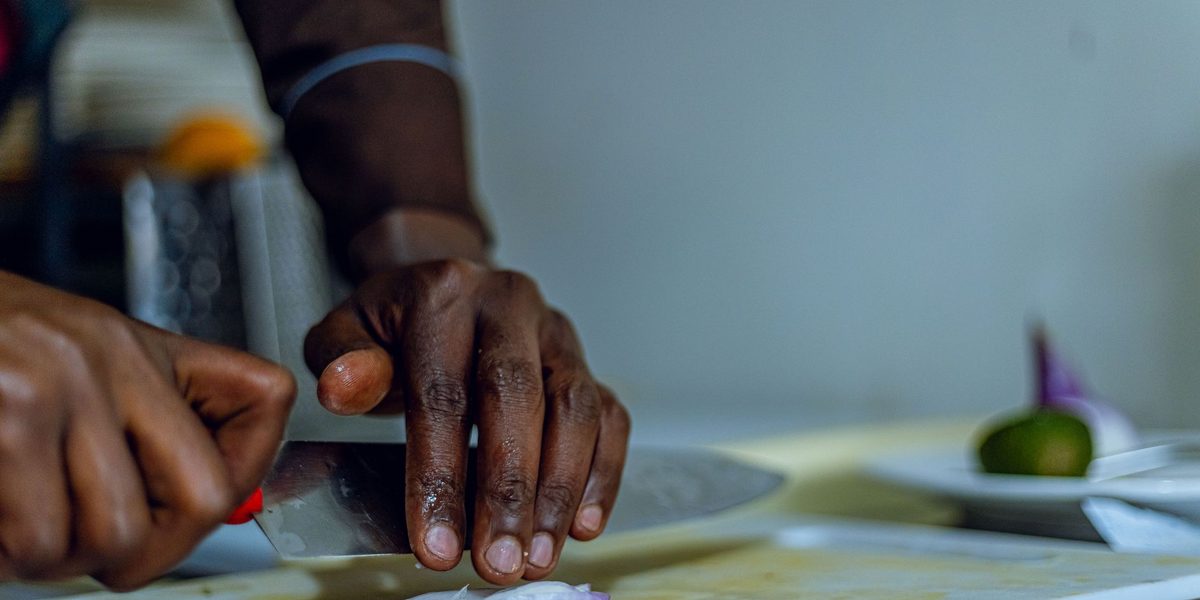
- Use a sharp knife. Clean cuts rupture fewer cells than crushing pressure, producing less irritant per slice.
- Manage the air. Cutting near a running vent, an open window, or a small fan carries the vapor away from your face before it reaches your eyes.
- Cut the root end last. Since it holds the highest concentration of precursors, saving it for the end shortens your exposure.
- Add water. Rinsing the onion or wetting the blade helps, because the irritant dissolves readily in water before it can fly.
- Block the route entirely. Snug goggles or contact lenses physically shield the eye's surface — inelegant, but genuinely effective.
Holding bread in your mouth or a spoon between your teeth, by contrast, does nothing to the chemistry; any relief is coincidence. Cooking, of course, ends the problem completely: heat destroys the enzyme, which is why a simmering pot of onions perfumes the kitchen without hurting anyone.
Garlic: Flavor Controlled by the Knife
Garlic uses the same two-compartment trick, but its signature reaction product is different — the famous pungent compound responsible for raw garlic's heat and bite. The practical consequence is remarkable: because flavor is created by cell damage, the amount of damage you inflict is a volume knob.
A whole clove, peeled but uncut and cooked gently, stays mild and sweet, because almost no cells were broken and almost no pungent compound was ever made. Sliced garlic breaks a moderate number of cells and gives a clear but rounded garlic presence. Minced garlic turns the knob higher. Crushed, pressed, or grated garlic ruptures nearly every cell, producing the maximum burst of sharp, hot intensity. Same clove, four different ingredients — the recipe writer who specifies smashed versus sliced is not being fussy; they are dialing in chemistry. There is a timing detail worth knowing too: the reaction takes a little time to develop, so garlic chopped and rested for several minutes tastes stronger than garlic tossed into hot fat immediately, because heat halts the enzyme before it finishes working.
From Raw Sharpness to Caramel Sweetness
Raw onions bite; slowly cooked onions taste like candy. Both facts come from chemistry. Heat first destroys the enzyme system, so no new pungent compounds are produced. The harsh sulfur molecules already present begin breaking down and transforming into sweeter, mellower, savory compounds. Meanwhile, onions are surprisingly rich in natural sugars, and long, gentle cooking drives off water, concentrates those sugars, and pushes them through browning reactions that create the deep, complex flavors of true caramelized onions.
That transformation cannot be rushed, and this is where many home cooks go wrong. Recipes sometimes promise caramelized onions in ten minutes; real ones take patience — often the better part of an hour — because the water must evaporate before the sugars can brown. High heat merely scorches the edges while the interior stays raw and sharp. Low and slow, with an occasional stir and a splash of water to loosen the sticky browned layer on the pan, is the entire technique. The reward is an ingredient that makes soups, sandwiches, tarts, and burgers taste extraordinary using nothing but onions, fat, and time.
Why Garlic Burns So Easily
Garlic's dark side is how quickly it goes from golden and fragrant to acrid and bitter. Several factors gang up on it. Garlic pieces are small, so they heat through almost instantly. They are low in water and relatively high in sugars and proteins, which means they race through browning and into burning far faster than an onion would. And the same sulfur compounds that taste pleasantly pungent when raw or gently cooked convert into genuinely bitter molecules when scorched. Burnt garlic does not just lose flavor — it actively ruins a dish, spreading bitterness through the whole pan.
The fixes are simple once you know the cause. Cook garlic over moderate rather than high heat, and give it seconds, not minutes — until fragrant and barely golden. When a recipe involves onions and garlic together, add the garlic near the end of the onions' cooking, not the beginning, since onions need far longer. Cutting garlic into larger slices instead of a fine mince buys you time, as bigger pieces heat more slowly. Adding garlic to a cold pan with cold oil and warming them together also works beautifully, gently infusing the fat before the garlic can scorch. If garlic ever blackens, the best move is to wipe out the pan and start over — no amount of sauce will hide it.
Putting the Chemistry to Work
All this science condenses into a few habits. Match the cut to the job: whole or thick-cut alliums for gentle sweetness in slow dishes, fine mince or a crush when you want raw punch in dressings and salsas. Tame raw onion's bite for salads by rinsing slices in cold water or soaking them briefly in something acidic, which washes away and neutralizes the sharp compounds on the surface. Give caramelization the time it truly needs. Treat garlic as a finisher in the pan, not a starter. And keep that knife sharp — your eyes and your onions will both be better for it.
Final Thoughts
Onions and garlic are not just ingredients; they are little chemistry sets that respond to exactly how you treat them. The knife decides how much flavor is created, the heat decides what that flavor becomes, and time decides whether you land on harsh, mellow, sweet, or bitter. Cry less, crush with intention, and caramelize with patience — the science has been on your side all along.