Insulation is one of the least glamorous materials in a house and one of the most consequential. It never moves, never makes a sound, and is almost never seen, yet it quietly shapes your comfort in every season and influences what you pay to heat and cool your home for as long as you live there. To understand insulation, though, you first have to understand its opponent. Insulation exists to slow the movement of heat, and heat, it turns out, is a relentless traveler with three different ways of getting around.
How Heat Actually Moves
Heat always flows from warmer to cooler, never the reverse, and it uses three mechanisms to do it. Conduction is heat moving through solid material by direct contact, the way a metal spoon left in a hot pot becomes too hot to touch. In a house, conduction carries heat straight through walls, ceilings, and window glass. Convection is heat carried by moving fluids, including air: warm air rises, cool air sinks, and air leaking through gaps ferries heat with it wherever it goes. Radiation is heat traveling as invisible waves through space, which is why you feel warmth on your face from a fire across the room, and why a sun-baked roof pushes heat down into an attic even without contact.
Every home loses or gains heat through all three routes at once. Winter heat conducts out through the ceiling, rides convection currents through gaps and cracks, and radiates away from warm surfaces. Summer reverses the flow. A well-insulated home is simply one that has slowed all three of these highways at their busiest points.
What Insulation Actually Does
Here is the surprise at the center of the subject: most insulation is mostly air. Fiberglass, cellulose, mineral wool, and foam all work the same way, by trapping air in millions of tiny pockets. Still air is a genuinely poor conductor of heat, but only when it cannot move. Left to itself in an open wall cavity, air circulates and carries heat by convection. Insulation's real job is to hold air still, dividing it into pockets so small that circulation becomes impossible. The solid material, the glass fibers or plant fibers or foam, is really just scaffolding for captive air.
This explains a rule that puzzles many homeowners: compressed insulation performs worse, not better. Squashing a thick batt into a thin gap crushes the air pockets that do the actual work. It also explains why wet insulation fails so completely, since water conducts heat far better than air, and why a gap in coverage matters so much: heat, like water, finds the easy path, and a small uninsulated void leaks a disproportionate amount of heat.
R-Value in Plain Language
Insulation is rated by R-value, where the R stands for resistance to heat flow. The higher the number, the more slowly heat passes through. R-value is roughly additive, so two layers stack their resistance, which is why attics often hold deep piles of insulation while walls make do with whatever fits between the studs. The concept matters more than the arithmetic: R-value measures resistance to conduction, and it assumes the insulation is dry, uncompressed, and installed without gaps. A high R-value material installed sloppily around wires and pipes can perform far below its rating, which is why quality of installation is as important a question as choice of material. It also helps to remember that R-value describes a single layer of the building, not the whole house. A wall is a sandwich of siding, sheathing, insulation, and drywall, and its real-world performance depends on the whole assembly, including the wooden studs, which conduct heat more readily than the insulation between them and act as small thermal shortcuts through an otherwise well-wrapped wall.
Where Homes Lose Heat
Homes lose heat in predictable places, and the pattern comes from a phenomenon called the stack effect. Warm air rises and escapes through openings high in the house; that escaping air creates gentle suction that pulls cold outside air in through openings low in the house. The house behaves like a slow chimney, exhaling at the top and inhaling at the bottom. This is why the attic floor and the basement or crawlspace matter more than the walls in many homes: they sit at the two ends of the chimney.
Alongside insulation gaps, air leakage deserves equal billing. Gaps around plumbing penetrations, recessed lights, attic hatches, chimneys, and the joint where the house frame meets the foundation all let air carry heat directly past the insulation. Insulating without air sealing is like wearing a thick sweater on a windy day: the material is fine, but the wind blows straight through. Serious energy improvements treat air sealing and insulation as partners, not alternatives. Windows, for all the attention they get, are usually a smaller piece of the picture; they matter, but a leaky, thinly insulated attic almost always matters more.
Types of Insulation, Conceptually
The common insulation families differ mainly in what traps the air and how the material is delivered into the building.
- Batts and rolls: flexible blankets of fiberglass or mineral wool sized to fit between framing. Inexpensive and widely used, but their performance depends heavily on careful fitting around obstacles.
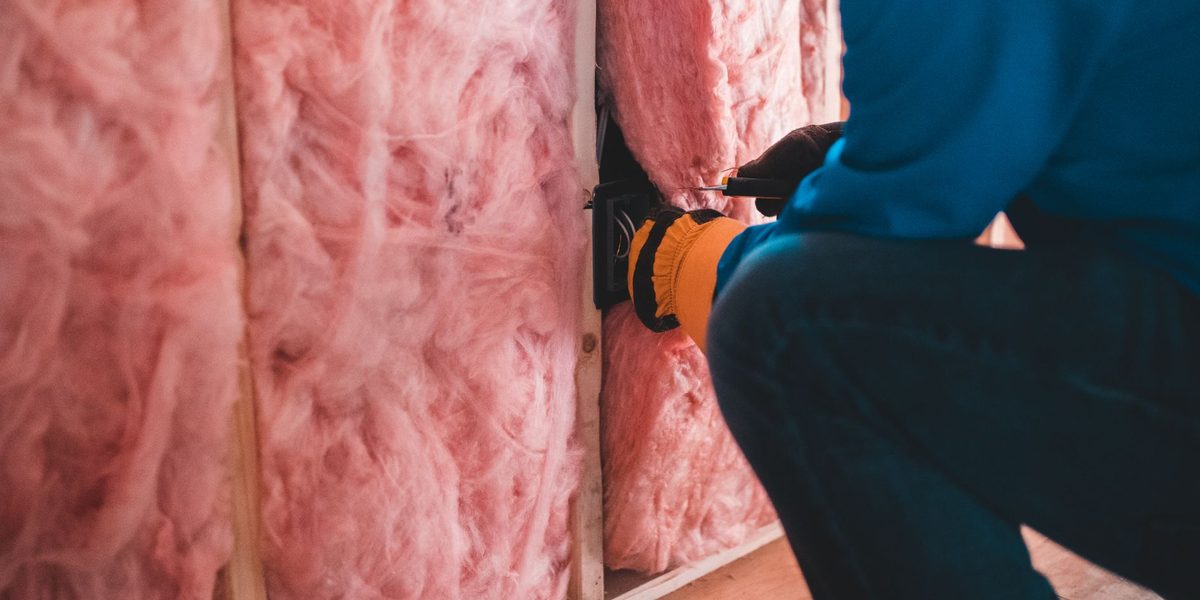
- Blown-in (loose fill): fluffy cellulose or fiberglass blown through a hose, which lets it flow around wires and irregular shapes. A favorite for attic floors and for filling existing wall cavities.
- Spray foam: a liquid that expands and hardens in place, insulating and air sealing in one step. It reaches high R-values per inch but is the most expensive family and is best installed by professionals.
- Rigid foam boards: stiff panels used on foundations, under siding, or on roofs, valuable because they add a continuous layer that covers the framing itself, which would otherwise conduct heat around the insulation between studs.
- Radiant barriers: reflective foil surfaces that address radiation rather than conduction, most useful under hot-climate roofs where the main problem is the sun's radiant heat pressing down into the attic.
Why the Attic Matters Most
If a home can improve only one area, the attic is almost always the answer, for reasons that follow directly from everything above. Heat rises, so the ceiling sees the largest temperature difference in winter, and the stack effect makes the attic plane the house's main exhale point. The attic is also, in most homes, the one place where insulation can be added easily and deeply, without opening walls, simply because the space is accessible and has room for thickness.
The attic also illustrates a subtlety worth understanding: insulation and ventilation work together there, not against each other. In a conventional attic, insulation on the floor keeps house heat downstairs, while vents at the eaves and ridge deliberately keep the attic itself close to outdoor temperature. That cold-attic design protects the roof, helps prevent ice buildup at the eaves in snowy climates, and lets moisture escape rather than condensing in the insulation. An attic that seems drafty above the insulation is often working exactly as intended.
Final Thoughts
Insulation is best understood as a strategy rather than a substance: identify how heat is moving, then place still air, and occasionally a reflective surface, in its path. Conduction is slowed by trapped-air materials and their R-value, convection is stopped by air sealing, and radiation is turned back by reflective barriers where climate calls for them. None of this requires touching a single batt yourself. Knowing how your home holds heat lets you interpret drafts and cold rooms as clues, prioritize the attic over flashier upgrades, and evaluate any contractor's proposal with the calm confidence of someone who understands what the material is actually being asked to do.