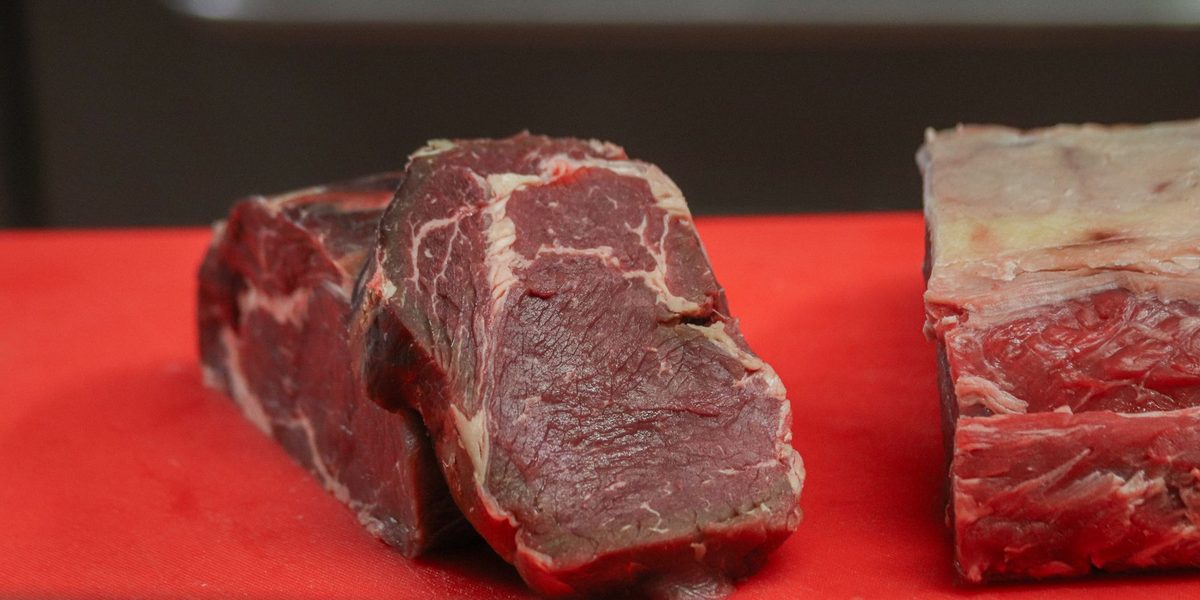
You pull a beautiful steak off the grill or a golden roast chicken out of the oven, and every instinct says to cut into it right away. Then someone reminds you to let it rest, and you stand there wondering whether the wait actually does anything or whether it is just one of those rules cooks repeat without thinking. The good news is that resting meat is not superstition. It is a simple, predictable piece of kitchen science, and once you understand what is happening inside that steak while it sits on the cutting board, you will never skip the step again. This guide walks through what cooking does to meat, why a short rest changes the eating experience, and how to time it for different cuts.
What Happens Inside Meat as It Cooks
Meat is mostly water held inside bundles of muscle fibers, wrapped in connective tissue. When heat hits those fibers, the proteins begin to tighten and contract, the same way a sponge shrinks when you squeeze it. As the proteins squeeze, they push moisture out of the cells and toward the center and surface of the meat. The hotter the meat gets, the more forcefully the fibers contract and the more moisture gets displaced.
This is why an overcooked steak is dry even though it started as the same juicy cut as a perfectly cooked one. The water did not vanish into thin air; most of it was wrung out of the muscle fibers by heat. Cooking well is largely about managing that squeeze, and resting is the final part of the management.
The Real Reason Resting Works
The classic explanation says that resting lets the juices redistribute from the center back to the edges. That is broadly true, but the fuller picture is even more interesting. When meat is hot off the heat, the liquid inside it is thin, hot, and under pressure from those contracted fibers. Slice immediately and that liquid pours out onto the cutting board, taking flavor with it.
As the meat rests and its temperature evens out, two useful things happen. First, the muscle fibers relax slightly as they cool, loosening their grip and allowing moisture to be reabsorbed throughout the cut. Second, the juices themselves thicken as they cool, because dissolved proteins make the liquid more viscous at lower temperatures. Thicker juices cling to the meat instead of running out. The result is that a rested steak loses noticeably less liquid when sliced than an identical unrested one, and every bite tastes juicier.
Carryover Cooking: The Heat That Keeps Going
Resting is not only about juices. Meat continues to cook after it leaves the heat, a phenomenon known as carryover cooking. The outer layers of a roast or steak are much hotter than the center when you pull it, and that stored heat keeps traveling inward for several minutes. A large roast can climb a surprising amount in internal temperature while it sits, while a thin cutlet may rise only a degree or two.
Smart cooks use carryover as a tool. Instead of cooking a roast all the way to the target temperature, they pull it a bit early and let the rest finish the job. This is one of the most common reasons home roasts come out overdone: the cook waited for the perfect number on the thermometer, then rested the meat, and carryover pushed it well past perfect. Think of resting and carryover as the last stage of cooking, not something that happens after cooking ends.
How Long to Rest Different Cuts
There is no single magic number, but the guiding principle is simple: the bigger and thicker the cut, the longer the rest. Small pieces even out quickly; large ones need real time.
- Thin cuts like cutlets, chops, and skirt steak need only three to five minutes.
- Standard steaks around an inch or more thick do well with five to ten minutes.
- Whole chickens benefit from ten to fifteen minutes, which also makes carving far easier.
- Large roasts such as beef rib roasts, pork shoulders, or whole turkeys deserve twenty to thirty minutes or more.
A useful rule of thumb is to rest meat for roughly half as long as it cooked, up to a sensible maximum, or simply until its internal temperature stops rising and begins to drift down. If you own a probe thermometer, watch the numbers: the peak of the carryover climb is a natural signal that the rest has done its main work.
Will the Meat Get Cold?
The most common fear about resting is serving lukewarm food, and it is mostly unfounded. A thick steak or roast holds heat remarkably well; even after fifteen minutes, the interior of a large roast is typically still piping hot. Thin cuts do cool faster, which is exactly why they need only a few minutes.
There are also easy ways to hedge. Rest meat on a warm plate rather than a cold one, since a chilled surface pulls heat out of the bottom quickly. Serve on warmed dinner plates if you like. And remember that sauce, sides, and gravy are usually hot, which lifts the whole plate. A slightly less scalding but far juicier steak is a trade every eater would take.
To Tent or Not to Tent
Loosely draping foil over resting meat is traditional, and it does slow surface cooling, which helps on large roasts resting for a long time in a cool kitchen. But tenting has a cost: it traps steam, and steam is the enemy of a crisp exterior. A carefully seared crust or crackling roast chicken skin will soften noticeably under foil.
The practical compromise is to match the tent to the cut. Skip the foil for anything with a crust or skin you worked hard for, especially steaks and roast poultry resting for modest times. Use a loose tent for big roasts that will sit for twenty minutes or more, keeping the foil high and loose so air can circulate rather than sealing it tightly around the meat.
The Searing Myth
While we are correcting kitchen folklore, it is worth retiring the old claim that searing seals in juices. Browning meat over high heat creates deep, savory flavor through the browning reactions on the surface, and that is reason enough to do it. But a seared crust is not waterproof; moisture escapes through it readily, which you can hear in the continued sizzle and see in the juices that still appear on a cutting board.
Understanding this changes nothing about technique and everything about mindset. Sear for flavor, cook gently for tenderness, and rest for juiciness. Each step has its own job, and no step can do another step's work.
Slice Against the Grain
Resting sets you up for the final move that determines tenderness at the table: slicing against the grain. Muscle fibers run in visible parallel lines through meat. Cut parallel to those lines and each bite contains long, chewy strands; cut across them and the knife does the chewing for you, shortening every fiber into tender pieces.
The rest period is the perfect moment to find the grain, since the meat is sitting still and you have a few minutes to look. On cuts like flank or skirt steak, where the grain is strong and obvious, slicing direction makes a bigger difference to tenderness than almost anything else you do. Combine a proper rest with thin slices across the grain and even inexpensive cuts eat like something far pricier.
Final Thoughts
Resting meat is one of the rare kitchen techniques that costs nothing, requires no equipment, and improves nearly every result. Heat squeezes moisture out of muscle fibers; a short rest lets the fibers relax, the juices thicken, and the temperature settle so that flavor stays in the meat instead of on the board. Pull your meat a little early to account for carryover, give it time in proportion to its size, skip the tight foil wrap when a crisp surface matters, and slice across the grain. Five quiet minutes of patience is the cheapest upgrade your cooking will ever get.