Few kitchen words get tangled together like stock and broth. Recipes use them interchangeably, cartons at the store label nearly identical liquids with different names, and then bone broth arrives claiming to be a third thing entirely. The confusion is understandable, because all three are savory liquids made by simmering ingredients in water. But there are real, practical differences — in what goes into the pot, how long it simmers, and what the finished liquid can do in your cooking. Understanding them takes about ten minutes, saves money, and quietly upgrades every soup, sauce, and pot of grains you make afterward.
The Core Difference: Bones Versus Meat
The traditional distinction is simple. Stock is made primarily from bones — often with a little meat clinging on, plus aromatic vegetables — and is simmered long enough to pull structure out of those bones. Broth is made primarily from meat, sometimes with bones present but not the point, and is simmered for a shorter time. That difference in raw material creates a difference in character: stock is about body, broth is about flavor.
Meat gives up its savory, brothy taste fairly quickly, which is why a broth can be delicious after an hour. Bones are stingier. Their treasure is collagen — the connective protein woven through joints, cartilage, and the bones themselves — and collagen only dissolves with long, gentle heat. Simmered for hours, collagen unwinds into gelatin, which dissolves into the liquid and gives stock its signature richness. So a classic broth tastes like the meat it came from and feels light on the tongue, while a classic stock may taste comparatively plain sipped alone, but carries a silky weight that transforms whatever it is added to.
Why Stock Gels in the Fridge
Pull a good homemade stock out of the refrigerator and it wobbles like a savory dessert. That jiggle is gelatin doing exactly what it does in a gelled dessert: at fridge temperatures its long protein strands tangle into a mesh that traps the liquid, and at cooking temperatures the mesh melts back into a rich fluid. A stock that gels is a compliment, not a flaw — it means the simmer extracted plenty of collagen.
Gelatin is why stock behaves so differently from broth in cooking. It gives sauces a glossy, lip-coating body without cream or flour, helps pan sauces cling to meat instead of running off, and makes braises feel luxurious. Collagen-rich parts — chicken wings, backs, and feet, pork trotters, beef knuckle and joint bones — produce the firmest gel. Broth rarely gels because meat contains far less collagen, and a short simmer would not extract much anyway. If your stock does not set, it is still useful; it simply carried less gelatin, often because the bone-to-water ratio was generous with water or the simmer was short.
So What Is Bone Broth?
Structurally, bone broth is closer to stock than to broth: bones, water, aromatics, and a very long simmer — often longer than a classic stock — usually with a splash of something acidic like vinegar, which is said to help coax minerals from the bones. The practical result is a deeply extracted, gelatin-heavy liquid that is seasoned to be sipped on its own like a hot drink, whereas traditional stock is left unsalted because it is an ingredient, not a finished dish.
In other words, bone broth is essentially a well-made, well-seasoned stock wearing a different name. If you make good stock at home, you can salt a mugful and you have made bone broth. In cooking, the two are interchangeable; the name mostly signals how the liquid is meant to be consumed.
How Each One Is Used
Choosing between them is easier when you think about what the dish needs. Reach for broth when the liquid itself is the star and you want ready-made flavor: quick soups, sipping, poaching, thinning a purée just before serving. Reach for stock when you want body and a neutral backbone: risotto, pan sauces and gravies, braises, glazes, and any sauce you intend to reduce. Because stock is traditionally unsalted, it can be boiled down dramatically without becoming a salt bomb — reduce a seasoned broth the same way and it turns unpleasantly salty long before it turns rich.
The honest footnote: in a weeknight pot of soup, the difference is modest, and either will work. The distinction earns its keep in reductions and sauces, where gelatin and salt levels genuinely change the result.
Making Stock at Home From Scraps
Stock is less a recipe than a habit of not throwing things away. Keep a bag in the freezer and feed it over the weeks: roast chicken carcasses, raw trimmings and wing tips, onion ends, carrot peels, celery leaves, parsley stems, a garlic clove or two. When the bag is full, you are ready.
- Put bones and vegetable scraps in your largest pot and cover with cold water by a couple of inches. Starting cold helps proteins release gradually for a clearer result.
- Bring it barely to a simmer — lazy bubbles, never a rolling boil — and skim any gray foam that rises in the first half hour.
- Add gentle aromatics if you like: bay leaf, peppercorns, a few thyme sprigs. Skip salt entirely, and go easy on strong vegetables like brassicas, which turn sulfurous over a long simmer.
- Hold that quiet simmer: roughly three to five hours for poultry, longer for beef bones, under an hour for a delicate vegetable or fish version.
- Strain through a fine sieve, cool quickly, and refrigerate. Lift off the fat cap once it sets — or leave it as a protective seal until you use the stock.
Roasting bones and vegetables first gives a brown stock: darker, deeper, and sweeter from browning reactions. Skipping the roast gives a white stock: paler and cleaner-tasting, ideal when you do not want the liquid to dominate.
Clarity Versus Cloudiness
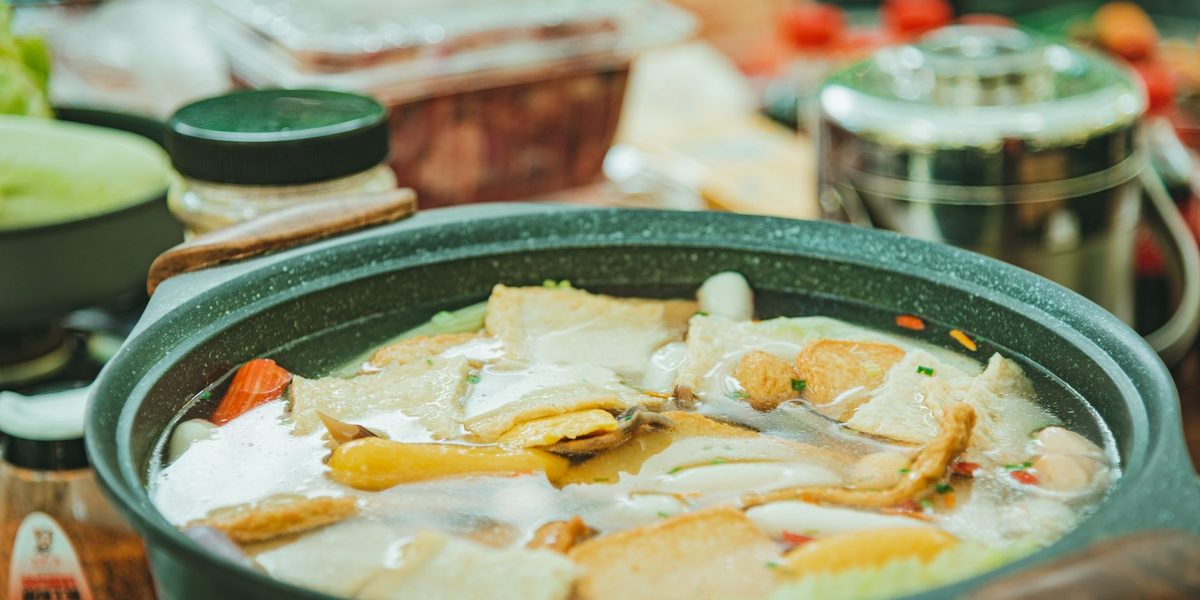
A stock turns cloudy when agitation breaks fat and protein into microscopic droplets that stay suspended in the liquid — which is exactly what a hard boil does. If you want a clear, refined stock for a delicate soup, keep the simmer gentle, skim early, and strain carefully without pressing on the solids. If you want the opposite, boil on purpose: the famously milky, rich style of long-boiled pork and chicken soups is a deliberate emulsion, opaque and full-bodied. Cloudy stock is not spoiled or badly made — clarity is a stylistic choice, not a grade.
Reducing, Storing, and Decoding the Carton
Stock takes up space, and reduction solves that. Boil the strained stock down to a fraction of its volume and you get a concentrated essence — reduced far enough, it sets firm and can be frozen in ice-cube trays, ready to be diluted or dropped straight into a pan sauce. Stock keeps several days refrigerated (a gelled, fat-capped stock keeps a bit longer) and for months frozen; freeze it flat in bags or in portioned containers so you can grab exactly what a recipe needs.
At the store, ignore the front of the carton — the words stock and broth are used loosely — and read the ingredient list and sodium line instead. A liquid whose list starts with actual chicken or beef and little else will behave most like homemade; one built on yeast extract, flavorings, and heavy salt is closer to bouillon. Low-sodium versions are the most flexible, since you can always add salt but never remove it, and carton products almost never contain enough gelatin to gel, which is worth remembering when a sauce recipe assumes homemade body.
Final Thoughts
Strip away the marketing and the map is simple: broth is meat simmered briefly for flavor, stock is bones simmered long for gelatin and body, and bone broth is a seasoned, sip-ready stock. Gelatin is the quiet hero of the story — it is why stock gels, why reduced stock makes sauces glossy, and why a freezer bag of scraps is worth more than it looks. Learn the difference once, keep the simmer gentle, and you will always know which liquid the pot in front of you actually needs.