Every part of a home is aging on its own private schedule. The roof and the water heater do not know about each other, but each is somewhere along a predictable arc from new to tired, and the arcs are driven by real physical processes: corrosion, fatigue, ultraviolet light, friction, and heat. Knowing roughly how long each system tends to live, and more importantly why it dies, changes homeownership from a series of ambushes into a schedule you can see coming. What follows are general expectations, not guarantees; climate, quality, usage, and luck all move the needle, which is exactly the point of understanding the mechanisms.
Why Things Wear Out at All
Almost everything in a house fails through a handful of mechanisms. Corrosion is chemistry: metal returning to its natural oxidized state wherever water and oxygen conspire. Fatigue is mechanical: materials flexed, heated, and cooled thousands of times develop microscopic cracks that grow. Ultraviolet light degrades anything organic left in the sun, drying and embrittling asphalt, rubber, and paint. Friction grinds moving parts. And heat accelerates nearly all of the above, which is why the hottest-running components of any machine usually fail first.
Two useful ideas follow. First, cycles matter more than years for many systems: a furnace that short-cycles endlessly, or a garage door opened six times a day, ages by repetitions, not birthdays. Second, most systems fail at their weakest specialized part, not everywhere at once, a roof at its flashing, a water heater at its tank seam, a washing machine at its bearings, which is why the same product can be a repair story in one home and a replacement story in another.
The Building Envelope: Roof, Siding, and Windows
Asphalt shingle roofs generally live a couple of decades, give or take, and their aging is mostly a sunlight story: ultraviolet light and heat slowly dry the asphalt, which shrinks, curls, and sheds its protective granules until it can no longer flex with the weather. Metal, tile, and slate roofs live far longer because their materials do not depend on oils staying supple, though their fasteners and flashings still age the ordinary way. Hot climates, dark unventilated attics, and rapid freeze-thaw cycling all shorten the arc; good attic ventilation stretches it.
Siding runs from a few decades for wood, which depends on its paint film for survival, to a very long life for brick, fiber cement, and quality vinyl. Windows are a composite story: the glass is eternal, but the sealed insulating unit between panes typically gives out after a couple of decades when its edge seal fatigues, and the moving parts, balances, cranks, weatherstripping, wear on their own schedules. When people say windows are shot, they usually mean seals and hardware, not glass.
The Mechanical Heart: Heating, Cooling, and Water Heaters
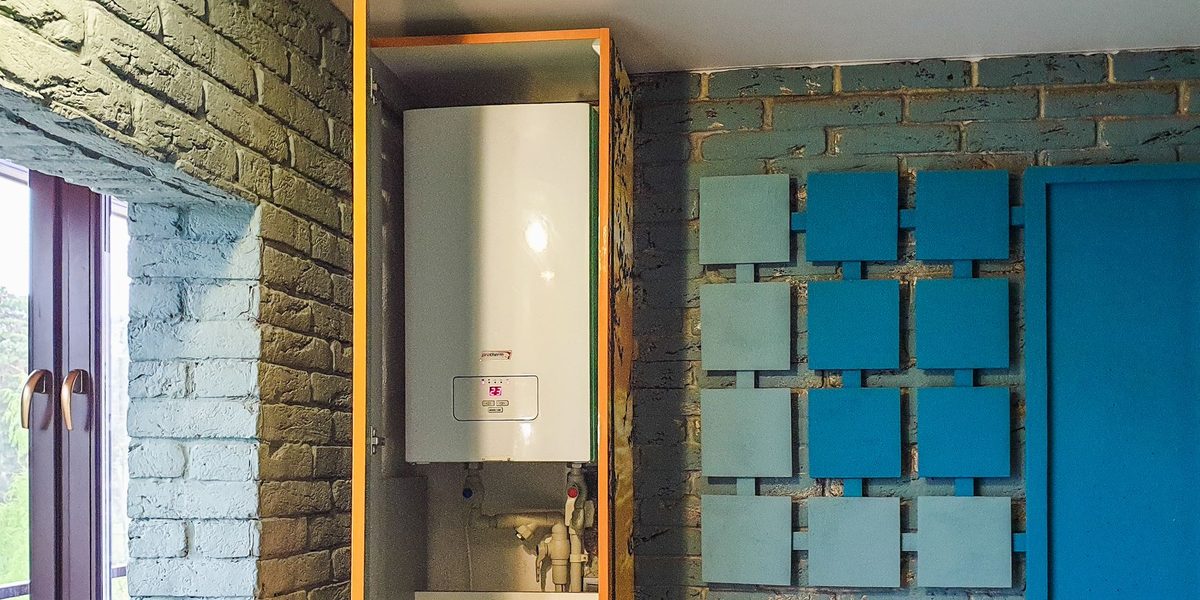
Furnaces commonly serve somewhere around two decades, their lives set by the heat exchanger, the metal chamber that is warmed and cooled with every cycle until fatigue cracks it, at which point replacement is the safe answer. Central air conditioners and heat pumps tend to live somewhat shorter lives, often in the fifteen-year neighborhood, because their compressor, a sealed pump working under pressure and heat, is doing hard mechanical labor every runtime hour; heat pumps run in both seasons, earning their earlier retirements honestly.
Tank water heaters are the sprinters of the mechanical family, often lasting only around a decade, and theirs is a corrosion story: a steel tank holding hot, mineral-laden water survives only as long as its glass lining and sacrificial anode rod keep the chemistry occupied. Once the anode is consumed, the tank itself corrodes on a countdown. Tankless units generally live longer, having no tank to rust through, provided scale is periodically cleaned from their heat exchangers. Across all of these, the great life-extenders are boring: clean filters, annual service, correct sizing, and, for water heaters, occasional flushing and anode attention.
The Working Fleet: Appliances
Major appliances mostly live in the ten-to-fifteen-year band, and each has a characteristic weak point. Refrigerators die by compressor and by dust-blanketed coils that force longer, hotter runs. Washing machines fail at bearings and seals, the parts that hold spinning drums full of water. Dryers wear their drums, rollers, and heating elements, and clogged vents make every load hotter and longer than designed. Dishwashers succumb to pumps, seals, and scale, hard water shortens them noticeably. Ranges and ovens, with few moving parts, often outlive the rest, retiring over electronics and elements rather than mechanics.
A pattern worth noticing: appliances increasingly fail through their control boards, the electronics that run everything, and board failures on older machines often tip the repair-versus-replace math toward replacement. Usage still rules, though; a washer in a family of six lives a different life from the same washer in a one-person condo, and gentle habits like not slamming doors or overloading drums are small but real deposits in the longevity account.
The Quiet Infrastructure: Pipes, Wiring, and Pavement
Plumbing lifespans depend almost entirely on material. Copper and modern plastics commonly serve for half a century or more, while the galvanized steel of older generations corrodes shut from the inside over decades, trading water pressure for rust. Drain lines of cast iron age similarly; modern PVC is expected to outlast its installers. Electrical wiring itself, copper in protected cable, has no meaningful expiry, but its accessories do: outlets, switches, breakers, and panels wear with use, and the insulation systems of much older eras eventually make electricians frown.
Outside, concrete driveways typically outlast asphalt ones, with both aging through the same enemy: water entering small cracks and freezing, jacking the cracks wider each winter. Sealing and drainage, not strength, decide pavement lifespans. Decks live or die by their fasteners, their flashing against the house, and how often their wood is protected from standing water.
Repair or Replace: Thinking in Arcs
Life expectancy knowledge earns its keep at decision time. A few general habits keep the choice rational:
- Place the system on its arc. A major repair early in life is usually worth it; the same repair at the natural end of the lifespan buys little runway.
- Weigh the repair against remaining life, not against replacement cost alone. Half the price of a new unit is a poor deal on a machine with a tenth of its life left.
- Watch for the cluster. Failures arriving in bunches are a system announcing the end of its arc, not a run of bad luck.
- Count efficiency drift. Aging heating, cooling, and refrigeration quietly cost more each year, which stacks the math further toward replacement late in life.
- Budget by arc, not by emergency. Knowing the roof and the water heater are both entering their final act converts two future crises into one planned season.
None of this requires precision. Even rough placement, early, middle, or late in a typical lifespan, sorts most decisions cleanly, and a trusted professional's assessment fills in the rest.
Final Thoughts
A house is a fleet of machines and materials, each moving along a knowable arc at a knowable pace, pushed by sun, water, heat, and repetition. The lifespans are general, but the mechanisms are universal, and the mechanisms are the useful part: they tell you what maintenance actually buys, why some failures are worth repairing and others are farewells, and which quiet system deserves your next glance. Homes reward the owner who thinks in arcs and plans a season ahead, because nothing in a house truly fails suddenly; it only finishes failing suddenly.