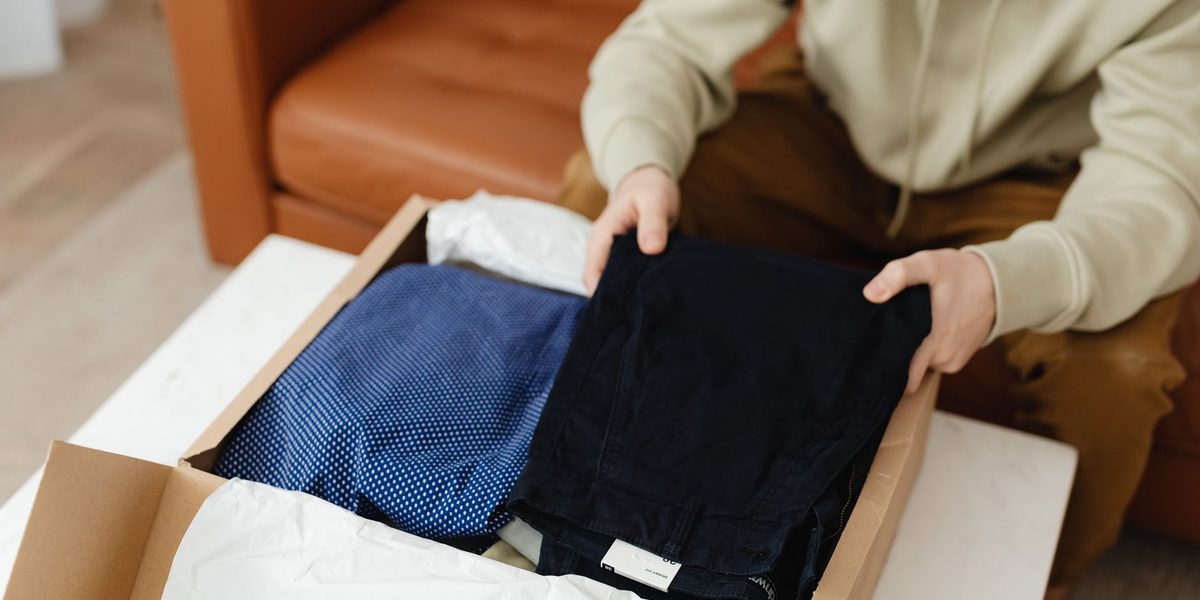
There is a particular satisfaction — mild, dependable, slightly smug — that follows clearing a desk, folding the laundry mountain, or finally emptying the car of its archaeological layers. People describe feeling lighter, clearer, even morally improved, which is odd on its face: the objects merely moved. Nothing was earned, learned, or created, and yet the mood shift is real enough that tidying videos rack up millions of views and a professional organizing industry thrives on it. The pleasure of tidying is not a quirk. It sits at the intersection of how attention works, how the mind experiences unfinished business, and how humans manufacture a sense of control — and understanding it explains both why order soothes and why the relationship between people and their stuff is more complicated than the before-and-after photos suggest.
Clutter Is Not Just Ugly — It's Loud
The starting fact is that visual clutter has cognitive cost. Attention is drawn by objects; that is its job. Every item in view makes a small claim on processing — researchers studying vision describe multiple stimuli as effectively competing for the brain's limited representation, and a crowded scene means more competition and more filtering work. A cluttered room is therefore not neutral background: it is a low hum of demands, each object a faint advertisement for itself, and the mind pays a filtering tax to ignore them all.
Clutter is loud in a second register too. Most mess is not random matter but suspended decisions — the mail to sort, the jacket to hang, the gadget to fix or finally admit is dead. Each is an open loop, and open loops are precisely what the mind cannot stop monitoring. A messy room hums with unfinished business in a way its owner feels without being able to name, which is why people so often report they can't think in a chaotic space and why the relief of clearing it feels cognitive, not just aesthetic: the loops closed, and the monitoring stopped.
A Small Machine for Manufacturing Control
The second engine of tidying's pleasure is control. A durable finding across psychology is that a sense of agency — the belief that your actions change outcomes — is central to wellbeing, and that feeling helpless in the face of circumstance is corrosive. Most of what troubles a life cannot be fixed in an afternoon: careers, health, other people. A drawer can. Tidying offers a rare, complete arc of competence — a visible problem, a known method, guaranteed success, immediate evidence — and the mind accepts this local victory as real data about capability.
This is why tidying urges spike in exactly the seasons when life feels least controllable — before exams, during job uncertainty, amid grief or breakups. The sudden compulsion to reorganize the pantry at midnight before an interview is not procrastination alone; it is the psyche reaching for the nearest available proof that it can still impose order on something. Used knowingly, this is a legitimate tool. A ten-minute tidy is one of the fastest ways to convert anxious paralysis into motion, and the motion generalizes: people routinely find that clearing the desk was the on-ramp to doing the work.
Why the Before-and-After Satisfies So Deeply
Tidying also happens to be structured like perfect satisfaction bait. It offers immediate visible feedback — every fold and shelved book updates the scoreboard in real time, a property that most meaningful modern work entirely lacks. It has a defined end state, so completion is unambiguous and the completion reward actually fires. It involves hands and objects, the embodied kind of task that reliably absorbs attention and quiets rumination — many people describe folding and sorting as meditative, and the description is mechanically accurate: repetitive manual tasks with mild attentional demand are a classic recipe for a settled mind. And it produces a changed environment you then inhabit, so the reward keeps paying every time you walk into the room.
Contrast this profile with answering email or caring for children — endless, ambiguous, restarting daily — and the disproportionate glow of a tidied closet stops being mysterious. It may be trivial, but it is finishable, and the mind is starved for finishable.
The Complications the Photos Leave Out
An honest account has to complicate the minimal white room, because the psychology of stuff runs deeper than the aesthetics:
- Order is not one-size-fits-all. Tolerance for visual complexity varies enormously; one person's serene emptiness is another's sterile void, and plenty of people genuinely think and create better amid controlled abundance. The desk that looks like chaos may be a filing system that its owner can navigate blind.
- Mess has its uses. Some research on environments suggests tidy spaces nudge people toward convention and disorderly ones toward novel combinations — a workshop mid-project is messy because thinking is happening in it. The goal is matching the space to the task, not universal minimization.
- Objects carry selves. Possessions encode memory and identity, which is why decluttering is emotionally expensive in ways organizing advice underestimates, and why other people's clutter should be handled — literally and figuratively — with care. Discarding a spouse's or parent's things without consent is experienced as a violation because, psychologically, it is one.
- Tidying can become avoidance. The organizing of the life can substitute for the living of it; a color-coded planner is not a finished thesis. And when order tips into distress at any disorder, or acquiring-and-keeping tips into hoarding, these stop being style differences and become clinical matters deserving professional support.
Working the Machinery on Purpose
Understanding why tidying feels good suggests how to spend it wisely. Use the small win deliberately: when stuck, anxious, or scattered, tidy one bounded surface — a desk, a counter, a single drawer — and ride the generated momentum into the real task rather than into the next drawer. Bound it in time, because tidying is elastic and will happily consume the whole evening its container offers. Aim for your functional order, not photographed order: the test is whether the space serves its task and its owner, not whether it would survive a magazine shoot. Prevent rather than binge — most clutter is deferred decisions, so systems that decide once (a place for mail, a donate box, a one-in-one-out rule) quietly outperform heroic seasonal purges. And when the urge to reorganize everything arrives at midnight, it is worth asking gently what, elsewhere in life, currently feels out of control. Sometimes the answer is nothing, and the pantry is just overdue. Sometimes the pantry is a message.
Shared spaces deserve one extra rule: negotiate the standard, don't enforce it. Household conflict over tidiness is rarely about hygiene and usually about two nervous systems with different noise thresholds sharing one room. Naming it that way — as a difference in wiring rather than a difference in virtue — turns a moral argument into a design problem, and design problems have solutions.
Final Thoughts
Tidying feels good because it is several deep satisfactions wearing an apron: quieted attention, closed loops, demonstrated control, visible progress, and a finish line that modern life almost never otherwise provides. The pleasure is real and mechanically explicable, which rescues it from both dismissal and cult status — a tidy room is neither a moral achievement nor a trivial one; it is a cognitive environment you have chosen to make quieter. Keep the machinery in its place and it serves beautifully: order as a tool for living, not a substitute for it. The drawer does not need to be perfect. It just needs to stop talking while you think.