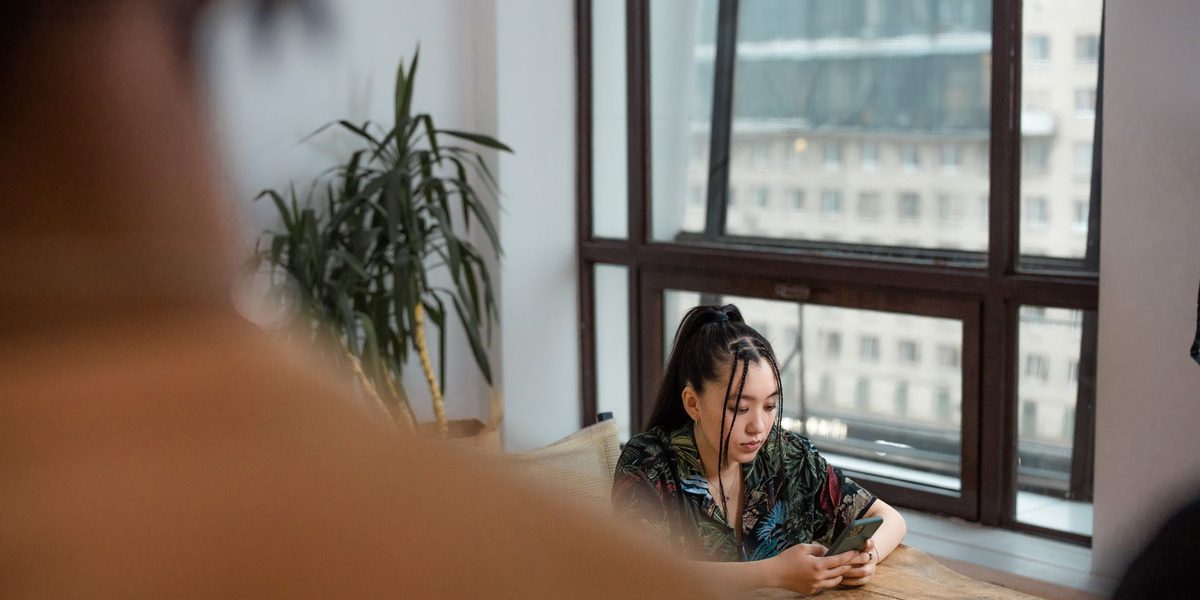
Slow living arrives in most people's lives as a photograph: linen curtains, a cup of tea, morning light on a wooden table. Like minimalism before it, the movement has been so thoroughly aestheticized that its actual argument is easy to miss. Slow living is not a decorating style, and it is not the claim that slower is always better. It is a critique of a very specific modern assumption — that faster is always better — and a set of ideas about what gets lost when speed becomes the default measure of a good life. Understood properly, it is less about tea and more about deciding, on purpose, what pace each part of your life deserves.
Where the Movement Began: A Protest About Food
Slow living has an unusually specific origin story. In the late twentieth century, plans for a fast-food restaurant near Rome's famous Spanish Steps provoked a protest by Italian food activists, who saw the arrival of standardized fast food in a historic square as a symbol of something larger: the industrialization of eating itself. Out of that protest grew the Slow Food movement, dedicated to traditional cooking, local ingredients, and meals treated as occasions rather than refueling stops.
The idea proved contagious. If food could be reclaimed from the logic of speed, why not other things? Over the following decades, the slow prefix spread to cities, travel, fashion, parenting, and eventually to living in general. What united all these offshoots was not slowness for its own sake but a shared question: what is this activity actually for, and does doing it faster serve that purpose or defeat it?
The Core Idea: Speed Has a Cost
The philosophical heart of slow living is the observation that speed is never free. Doing something faster almost always means doing it with less attention, and attention is where most of the pleasure and meaning in an activity lives. A meal eaten in six minutes at a desk delivers the same calories as a meal cooked and shared over an hour, but almost none of the same experience. The fast version is not a smaller portion of the slow one; it is a different activity wearing the same name.
Slow living generalizes this. Conversations, walks, work, raising children, even rest — each can be performed in a compressed, efficient mode that technically completes the activity while hollowing it out. The movement's claim is that modern life quietly converts more and more experiences into their compressed versions, not because anyone chose that, but because speed is the path of least resistance in a culture organized around productivity. The result is a life that is objectively full and subjectively thin.
What Slow Living Is Not
The photogenic version of the movement has produced predictable misunderstandings, and clearing them up matters:
- It is not doing everything slowly. The movement's own thinkers emphasize finding the right speed for each activity. Nobody argues for slow ambulances or leisurely tax filing. The target is defaulting to fast everywhere, including the places speed ruins.
- It is not a rural fantasy. Farmhouse imagery dominates the hashtag, but the philosophy was born in cities and applies most usefully there. You can eat attentively in an apartment.
- It is not idleness. Slow living is compatible with hard work and ambition; it questions hurry, not effort. Deep, absorbed work is one of its favorite examples of the right pace.
- It is not anti-technology. The movement objects to technology that sets your pace for you, not to technology as such.
The Difference Between Slow and Unhurried
A useful distinction inside the philosophy is between speed and hurry. Speed is a physical rate; hurry is a state of mind — the feeling of being pushed from behind, of every present moment being merely an obstacle between you and the next thing. You can move quickly without hurry, as any good chef during a dinner rush demonstrates, and you can be thoroughly hurried while lying still, mentally rehearsing tomorrow.
Slow living, at its most precise, is a campaign against hurry rather than against speed. The tea and the linen are optional. The essential move is withdrawing your consent from the feeling that now is never enough — that the present moment is a corridor to rush through rather than a room to occupy. This is why the movement overlaps with contemplative traditions without requiring any of them: attention to the present is the common ingredient.
Why the Idea Resonates Now
Movements catch on when they name something people already feel, and slow living names a distinctly modern ache. Most conveniences of the past century were sold with a promise of freed-up time, yet each wave of time-saving technology has coincided with people reporting feeling more rushed, not less. The reason is that saved time does not stay saved; it gets refilled, usually with more tasks, more consumption, and more of the very hurry the saving was supposed to relieve.
Digital life sharpened the ache. When every idle moment can be filled, idle moments start to feel like waste, and the capacity to be unstimulated — once a normal human state — begins to atrophy. Slow living resonates because it gives people permission to want what the culture treats as inefficiency: a walk without a podcast, a meal without a screen, a Sunday without a plan. The permission, more than any technique, may be the movement's real product.
What It Looks Like in Practice
Because slow living is a lens rather than a program, its practice varies enormously, but a few recognizable moves recur. People choose fewer commitments and honor them more fully, on the theory that a calendar can be full while a life feels empty. They rebuild rituals around ordinary acts — coffee made deliberately rather than grabbed, one proper meal a day eaten at a table. They single-task on purpose, treating one-thing-at-a-time not as a limitation but as the whole point. They protect stretches of unscheduled time and resist the urge to optimize them. And they practice what one strand of the movement calls savoring: deliberately extending attention on a good moment instead of reaching for the next one.
None of this requires purchasing anything, which is precisely why the commercial version of slow living — candles, robes, and rustic furniture — should be read as decoration around the idea rather than the idea itself. The practice is free. It always was.
The Honest Difficulties
A fair explainer admits the tensions. Pace is partly a privilege: a single parent working two jobs cannot simply choose leisurely mornings, and preaching slowness to the overworked can shade into insult. The movement's own writers increasingly acknowledge this, framing slow living less as an individual virtue and more as a critique of structures — work cultures, city designs, expectations — that make hurry mandatory. There is also a personal difficulty: hurry is a habit with deep roots, and people who clear space in their schedules often find the hurry simply follows them into the space. Slowing the calendar is easier than slowing the mind, and the second, by every account, takes far longer.
Final Thoughts
Slow living, stripped of its photography, is a single stubborn question: what pace does this moment actually call for? Sometimes the honest answer is fast — deadlines exist, children need to be at school, ambulances should hurry. But the movement bets that if you ask the question sincerely, you will find whole regions of your life running at a speed nobody chose, serving no purpose beyond momentum. Reclaiming those regions does not require a farmhouse or a new wardrobe. It requires noticing that the corridor you keep rushing through was, all along, a room.