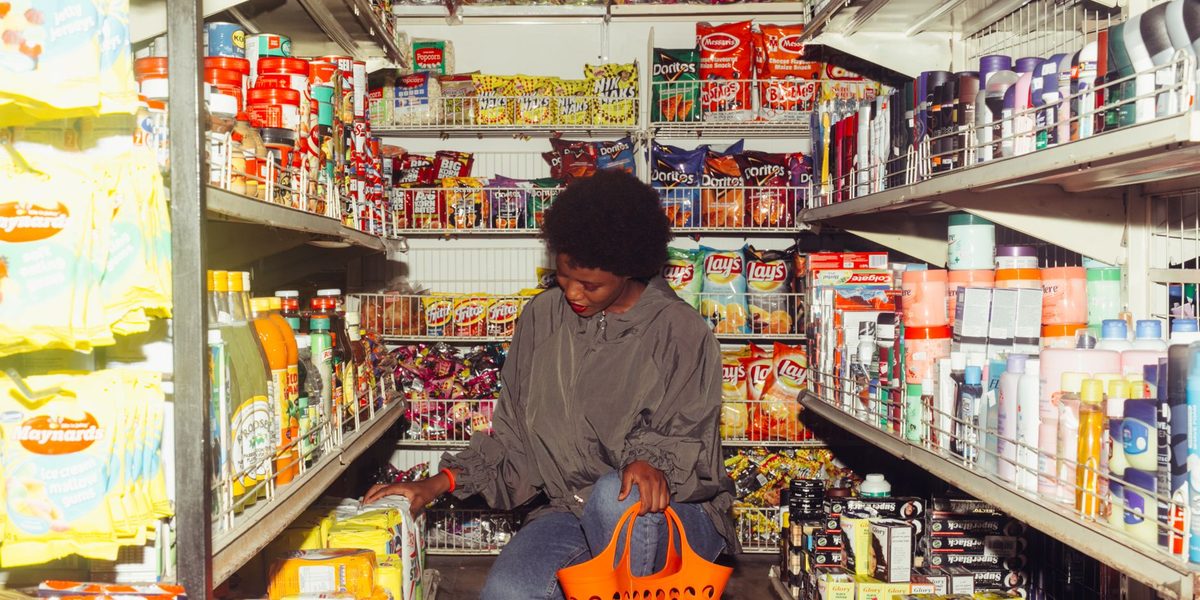
It is nine in the evening, someone asks what you want for dinner, and the question lands like a physics exam. You have made hundreds of decisions today — what to wear, which emails to answer first, whether to speak up in the meeting, which route to drive, what to say to your kid about the weekend — and now, faced with the simplest choice of the day, your mind refuses. This everyday collapse has a name: decision fatigue. It is one of the most practically useful concepts in the psychology of ordinary life, both because it explains so much puzzling behavior and because, once you understand it, it is unusually easy to do something about.
The Core Idea: Deciding Is Work
Decision fatigue rests on a simple claim: making choices consumes mental resources, and those resources are finite over the course of a day. Every decision, however small, requires the same basic operations — holding options in mind, comparing them against goals, suppressing the appealing-but-wrong option, committing, and letting go of the paths not taken. None of these operations is free. Do them a few hundred times and the machinery gets sluggish, exactly the way muscles do after repeated lifts.
What makes the concept counterintuitive is that the size of the decision matters less than you would expect. Choosing a salad dressing and choosing a job offer both spend from the same account, and the account is drained mostly by the number of withdrawals. This is why a day of trivial choices — a form-filling, option-comparing, errand-running kind of day — can leave you more depleted than a day of genuinely important work, and why open-ended environments like supermarkets and streaming menus are so strangely exhausting.
What a Fatigued Decider Looks Like
Mental fatigue does not usually announce itself. Instead, the depleted mind quietly changes strategy, and the changes follow a recognizable pattern:
- Defaulting. You start accepting whatever option requires no thought — the usual order, the pre-checked box, the path of least resistance.
- Deferring. Decisions get pushed to later, not because later is better but because deciding now feels impossible. The cart gets abandoned; the email stays flagged.
- Impulsivity. Alternatively, the tired mind grabs the first vivid option just to end the discomfort of choosing — which is why late-night purchases and pantry raids have their reputation.
- Irritability around trivial choices. The dinner question provokes an outsized flash of annoyance, a telltale sign that the day's budget is spent.
Notice that none of these look like tiredness. They look like laziness, indecisiveness, or bad character, which is exactly why decision fatigue goes unrecognized — in ourselves and, less charitably, in others.
Why Modern Life Is a Decision Factory
Decision fatigue is not new, but its scale is. For most of history, daily life ran on constraint: you ate what was in season, wore what you owned, worked at what your family worked at, and saw the people who lived nearby. Choice was scarce. Modern life inverted this. An ordinary person now navigates dozens of cereal brands, thousands of shows, endless subscription tiers, open-plan careers, and phones that convert every idle moment into a menu.
Abundance of choice is genuinely a luxury, but it has a tax, and the tax is cognitive. Every additional option adds comparison work, and every domain that once ran on default — where to get news, how to invest, what to watch, even how to describe your own lifestyle — now demands active management. Nobody decided that ordinary people should become the full-time administrators of their own lives; it happened one convenient option at a time. Decision fatigue is the invoice.
The Scientific Caveats, Honestly Stated
An honest explainer should note that the science here has been contested. Early research described willpower as a fuel that decisions literally burn, and some famous findings in that tradition have proven hard to reproduce. Later work suggests the picture is more subtle: depletion may have as much to do with motivation, attention, and the feeling of effort as with any literal fuel gauge, and people's beliefs about their own stamina seem to influence how quickly they flag.
But the practical phenomenon — that long stretches of choosing degrade the quality of later choices, and that people reliably feel it — is well supported and matches almost everyone's experience. Whether the mechanism is fuel, attention, or motivation matters for theory. For daily life, the operative fact is the same: choice quality is not constant across the day, and treating it as if it were is a planning error.
How Capable People Quietly Exploit This
Once you know decisions are a budget, a family of common habits among busy, effective people stops looking eccentric and starts looking rational. The signature move is automation by routine: eating the same breakfast, keeping a simplified wardrobe, exercising at the same hour, shopping from the same list. Outsiders read this as boring; practitioners experience it as freedom. Every choice converted into a routine is a decision that no longer has to be made, and its budget is released for choices that deserve it.
The second move is scheduling decisions instead of options. Important choices get made in the morning or after breaks, when the budget is full; trivial ones get batched, delegated, or defaulted deliberately. The third is designing defaults in advance: deciding once, while fresh, what future-you will do when tired — the pre-written grocery list, the standing order, the rule that big purchases wait a day. None of this requires discipline in the moment. That is the entire point: the moment is exactly when discipline is least available.
There is also a humbler tactic worth naming: simply caring less about choices that cannot go meaningfully wrong. Much everyday depletion comes from treating reversible, low-stakes picks — a paint shade, a podcast, a brand of olive oil — as if they were permanent verdicts on your judgment. Deciding quickly and moving on is not carelessness when the downside is trivial; it is budgeting.
Decision Fatigue in Relationships
One underappreciated arena for all this is the household. The question of what should we have for dinner is rarely about dinner; it is a request for someone else to spend their remaining decision budget so you can preserve yours. Couples and families often fall into lopsided arrangements where one person carries most of the everyday choosing — meals, appointments, gifts, logistics — a burden sometimes called the mental load. Because each individual choice is trivial, the carrier struggles to explain why they are exhausted, and the other partner honestly cannot see the weight.
Naming the phenomenon helps. So does converting recurring household choices into systems: rotating meal plans, shared lists, standing schedules, and explicit ownership of domains rather than case-by-case negotiation. The goal is not rigidity. It is making sure the family's collective decision budget gets spent on things that matter more than what to boil on a Tuesday.
Final Thoughts
Decision fatigue reframes a moral story as a mechanical one. The evening version of you who snaps at the dinner question, buys the gadget, and abandons the healthy plan is not a worse person than the morning version — just a person whose choosing machinery has been running for fourteen hours. You cannot opt out of deciding, but you can stop spending your best cognition on questions that never deserved it. Decide once, routinize the trivial, protect your mornings, and be a little gentler with your nine-p.m. self. It has been making choices all day, most of them for other people.